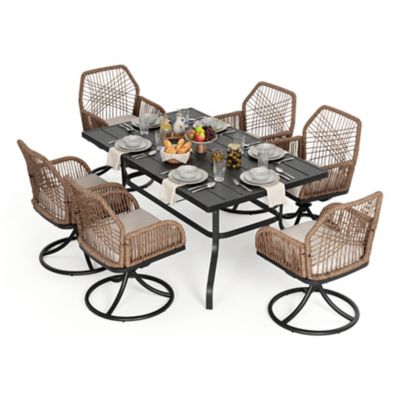
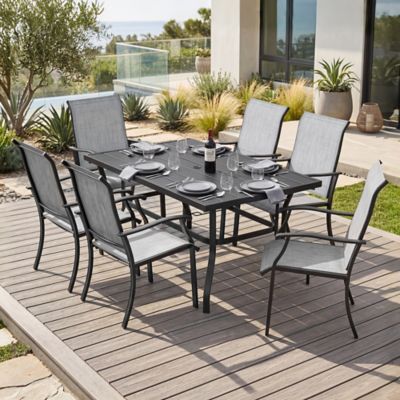
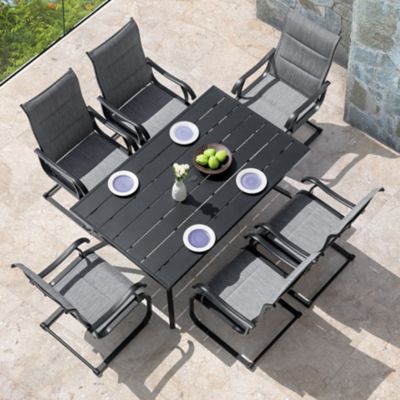
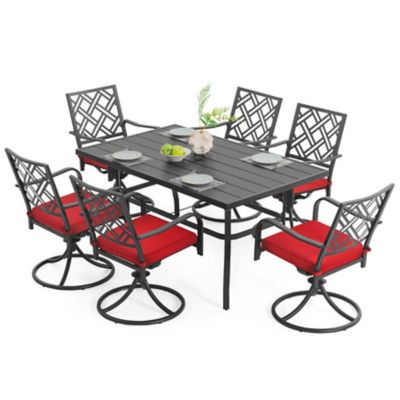
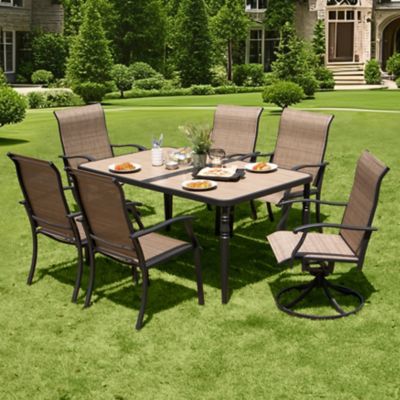
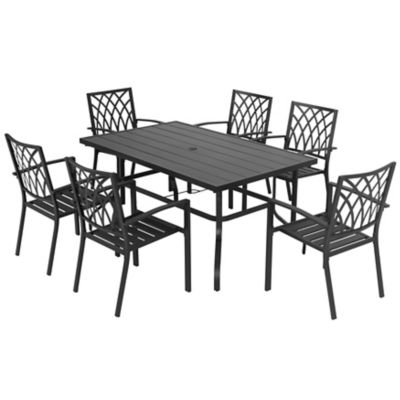
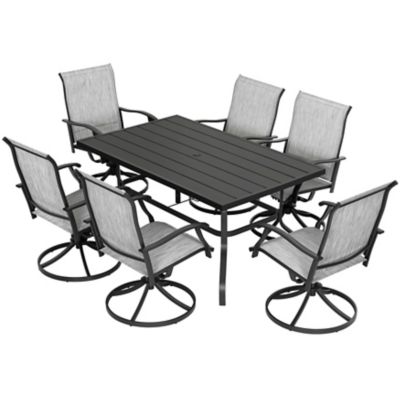
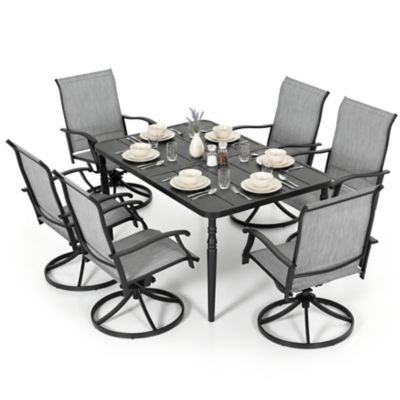
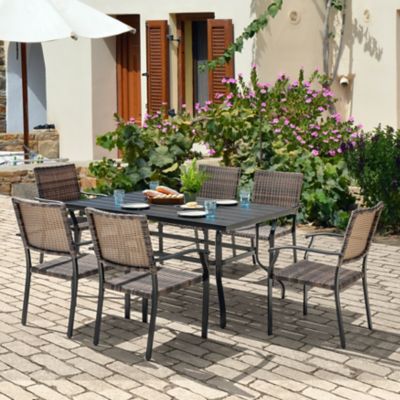
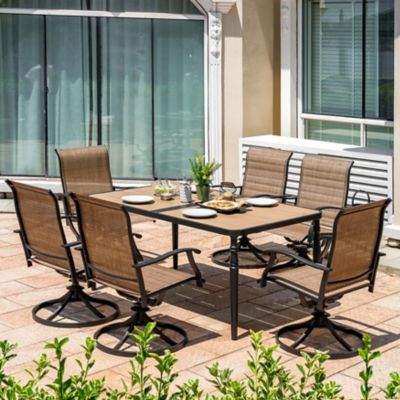
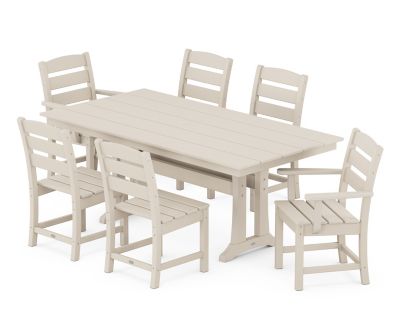
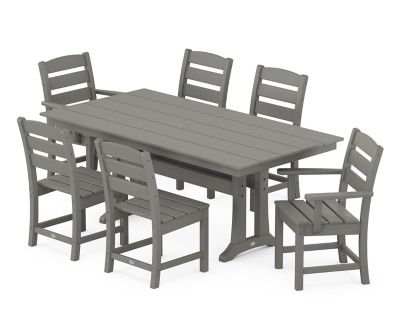
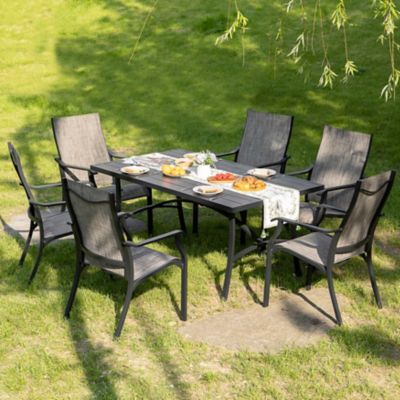
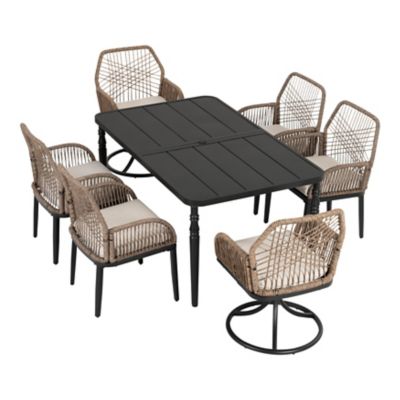
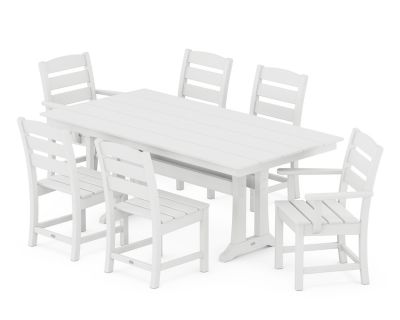
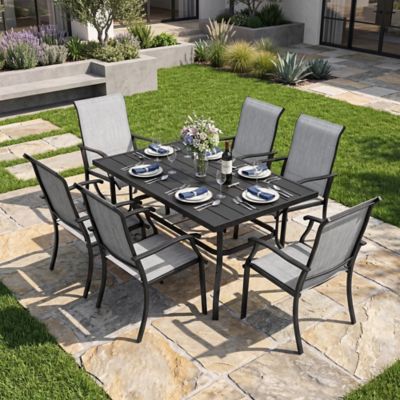
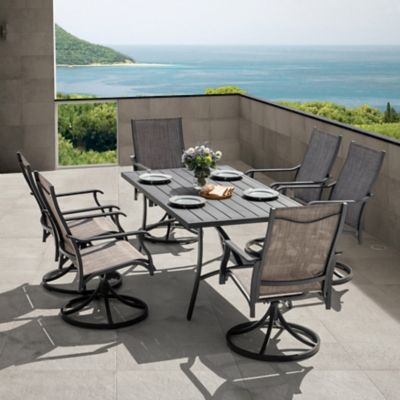
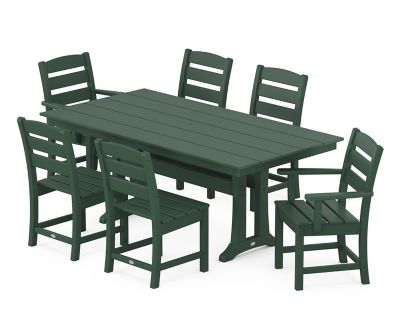
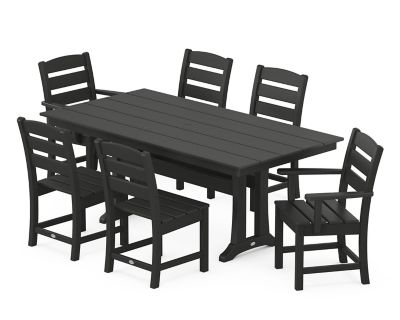
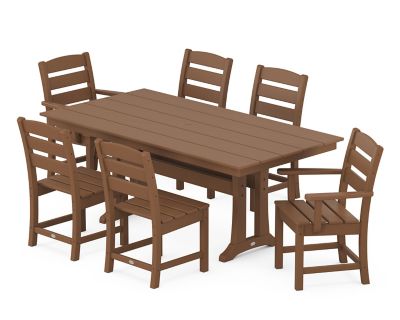
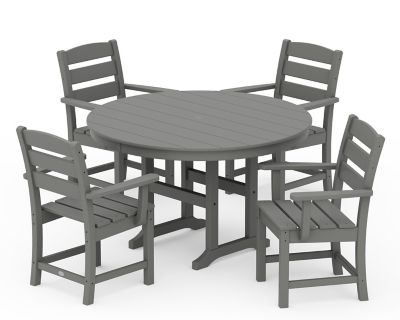
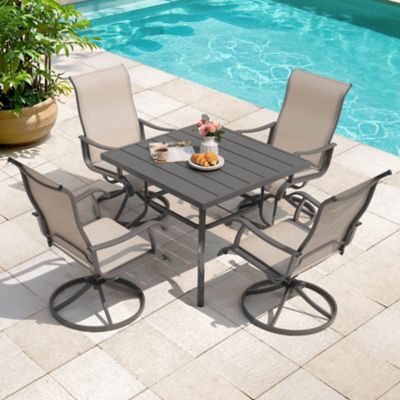
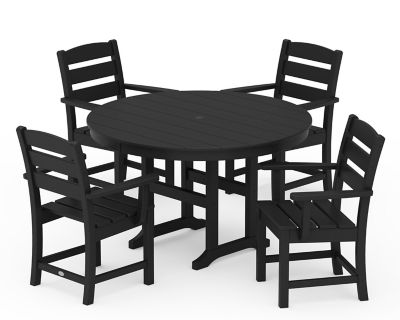
A 7-piece outdoor dining set typically includes one dining table and six matching chairs, giving six people a place to sit down for a meal on a patio, deck, or porch. That setup suits family suppers, a few neighbors stopping by, or a weekend lunch with enough seats to keep everyone at the same table. A coordinated set also takes some of the guesswork out of pairing chair heights, frame styles, and tabletop finishes. The table’s shape makes a difference in how the space works. Rectangular tables often fit naturally along a long porch or deck, while round tables make conversation easy across the group and leave no corners to walk around. Square layouts can work well in spaces with similar length and width, provided there is enough clearance on every side. Overall dimensions matter more than the piece count alone: two sets with six chairs can take up noticeably different amounts of space. Measuring the area with chairs pulled out helps show whether people can sit down without bumping a railing, planter, or nearby furniture. About 3 feet between the table edge and an obstruction is a useful starting point, with extra clearance wherever people need to pass behind occupied chairs. Door swings, steps, and the route between the kitchen and table deserve a little breathing room, too. A tabletop should have space for six place settings without crowding the serving bowl into someone’s elbow. Wider chairs and deep cushions can make a set feel roomy, but they also increase its footprint. For a smaller porch or a household that needs fewer seats,
Five Piece Patio Dining Sets offer a smaller-scale alternative. Standard dining-height furniture generally works best when the goal is familiar, sit-down meals; counter-height and bar-height arrangements require matching chair and table measurements. Checking the listed seat height, tabletop height, and arm clearance helps keep the whole setup comfortable, especially when chairs need to tuck beneath the table between meals.
Materials influence everything from the feel of the chair arms to the amount of upkeep a seven-piece patio dining set needs. Aluminum frames resist rust and are generally lighter to move, which can help when rearranging a deck or clearing space for cleaning. Steel frames often have more heft, but their protective finish needs attention if it becomes scratched or chipped. Wood brings visible grain and a solid feel, while its care needs depend on the species and finish. Some wood surfaces call for periodic cleaning and refinishing according to the manufacturer’s directions rather than a one-size-fits-all treatment. Synthetic wicker creates a woven look over a supporting frame, so both the weave and the frame material matter when comparing construction. Tabletop materials deserve the same attention. Slatted surfaces allow water to drain through, though crumbs can collect in the gaps. Glass offers a smooth surface for wiping away spills, while wood and metal tops have their own cleaning and maintenance requirements. Stable joints, secure fasteners, and well-supported chair seats are worth a close look because dining furniture handles repeated movement as people sit down, lean back, and slide chairs toward the table. Exposure to moisture and sunlight makes manufacturer care instructions especially important for outdoor furniture. Protective covers should fit the furniture, fasten securely, and allow ventilation as directed; covering wet furniture can trap moisture instead of helping it dry. Cushions are easier to manage when their fabric care requirements fit the household routine. Removable covers are not always machine washable, so the care label takes priority. Allowing cushions to dry fully before storage helps keep dampness from lingering inside the filling. Gentle cleaning, prompt attention to spills, and occasional checks of bolts and fittings can help keep the dining area ready for everyday meals. Pads or trivets under hot serving dishes also help protect the tabletop, with any material-specific precautions taken from the care instructions.
Comfort is what makes an outdoor dining table and six chairs useful beyond the occasional gathering. A chair that feels fine for a quick drink may feel different through a full supper, so seat depth, back angle, arm height, and cushion thickness all deserve consideration. Supportive backs and comfortable seat edges help people settle in without having to keep shifting around. Chairs with arms provide a place to rest elbows, while armless seating can offer more freedom of movement and may tuck closer to the table. Swivel seating needs enough surrounding clearance to turn without hitting the tabletop, another chair, or a railing. Cushions change the sitting height as well as the feel of a seat, making the distance between the cushion and the underside of the table worth checking. On a deck with uneven boards or a patio with slight changes in level, adjustable feet, where included, can help reduce rocking. The surface beneath the set should still be firm, level, and suitable for the furniture’s weight. An umbrella opening may be helpful for a dining area with direct sun, but the opening alone does not support an umbrella; pole dimensions, base requirements, and table compatibility need to line up. Everyday details matter just as much as the larger features. Easy-to-wipe chair arms come in handy after a meal with sticky fingers at the table, and chairs that move without much effort make sweeping underneath less of a chore. For households that regularly seat six, a matching set can bring a dependable rhythm to meals outdoors: room for the casserole dish, space to pass the bread, and a seat for everyone. It can also make a thoughtful housewarming or wedding gift when the recipients have a suitable outdoor space and the measurements are confirmed beforehand. The best fit comes from matching the set’s size, seating, materials, and care needs to the way that space gets enjoyed day after day.