


SINGER S0100 Serger vs. Brother 2340CV for Clothing Alterations
Pick the SINGER to trim and finish seams as you sew, or the Brother to give folded knit hems the parallel rows you see on store-bought tees.
Quick take: Which machine fits your repairs?
-
Choose the SINGER S0100 for seam work
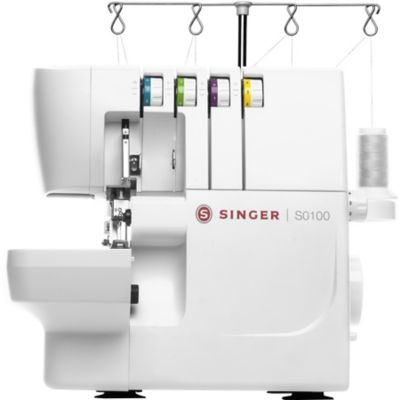
If you often take in side seams, the S0100 can sew the new seam, trim the excess fabric and finish the raw edge in one pass.
-
Choose the Brother 2340CV for knit hems
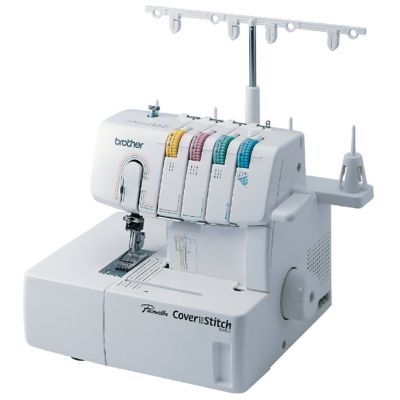
If you mostly shorten T-shirts or knit sleeves, the 2340CV lets you choose a coverstitch that matches the look of the original hem.
-
Start with a regular sewing machine for mixed repairs
If you mostly sew on patches, replace zippers or mend an occasional hem, a general-purpose sewing machine is the better first buy.
Turn a T-shirt inside out and look at the side seam and bottom hem. The side seam has thread wrapped around the cut edge, while the hem has stitching that holds a fold in place. That’s the practical difference in this serger vs. coverstitch comparison: the SINGER S0100 finishes the cut edge, and the Brother 2340CV stitches across the fold.
Product comparison
|
|
|
|---|---|---|
| Feature | ||
| Stitch options | 2-, 3- and 4-thread stitch options, with a rolled hem setting | Narrow, wide and three-needle coverstitches, plus a chain stitch |
| Trims as it stitches | The upper knife trims excess seam allowance when engaged | No seam trimming |
| Where the stitch goes | An overlock stitch wraps around the raw edge | A coverstitch holds a folded hem in place |
| Differential feed | Adjustable to help keep stretchy seams flat | Adjustable to help keep knit hems from going wavy |
| Typical alteration | Taking in the side seams of a knit shirt | Shortening a T-shirt or knit sleeve |
Neither specialty machine replaces a general-purpose sewing machine for jobs like patching clothes or replacing zippers.
Taking in a seam with the SINGER S0100
When a knit shirt is loose through the sides, the S0100 can join the fabric along the new seam line and wrap the freshly trimmed edge with thread. It also has a rolled hem setting for a narrow edge finish. That stitch wraps the edge rather than making parallel rows across a folded T-shirt hem.
Shortening a knit hem with the Brother 2340CV
Before trimming off the old T-shirt hem, look at how far apart its rows of stitching are. That gives you a starting point for choosing a narrow or wide coverstitch on the 2340CV. The machine holds the new fold in place without cutting the fabric, leaving parallel rows on the outside and loops underneath.
Buy for the alteration you do most often
If you’re taking in a shirt and shortening it, serge the side seams first, then coverstitch the bottom hem. If the sides already fit, there’s no need to redo them. And if you only shorten a knit shirt now and then, try a stretch stitch or narrow zigzag on the sewing machine you already have before buying a second machine.
Shop the SINGER S0100 Serger
Join seams and finish the raw edges, with an upper knife that trims as you sew.
Shop the Brother 2340CV Coverstitch Machine
Choose from narrow, wide or three-needle coverstitches for folded hems, or switch to a single row of chain stitching.
Tips for neater seams and hems
-
Test your stitch on a scrap with the same number of layers as the repair. If the knit comes out wavy, adjust the differential feed and test again.
-
Baste a new seam line and try on the garment before serging. It’s easier to adjust the fit while you still have the extra fabric.
-
Mark the finished hem length first, then mark the cutting line below it so you leave enough fabric to turn up the hem.
-
Check underneath after the first few coverstitches to make sure the stitching catches the turned-up fabric.
Frequently asked questions
Look inside the shirt. An overlock stitch wraps around a raw edge, often at a side seam. A coverstitched hem usually has parallel rows on the outside and loops on the inside.
It changes how fast the front and rear feed dogs move the fabric relative to each other. If a knit stretches and looks wavy as you sew, try a different setting on a scrap of the same fabric.
It means stitching around a closed opening, such as a sleeve cuff or the bottom of a shirt after the side seams are sewn. Instead of sewing from one edge to another, you sew around the opening until you reach your starting point.
Try a stretch stitch or a narrow zigzag so the stitching can give with the knit. Test it on a folded scrap and gently stretch the sample to see how it behaves.
Yes. Some combination machines can do both, though you switch setups between jobs. If you want both stitches in one machine, look for overlock and coverstitch on the stitch list rather than going by the word “serger” alone.