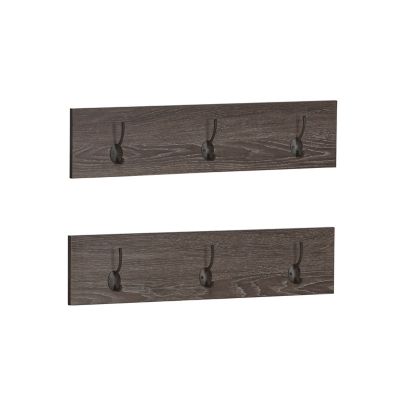
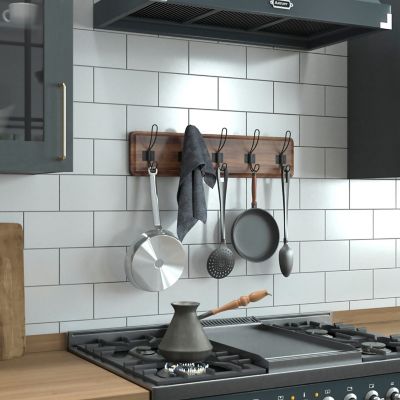
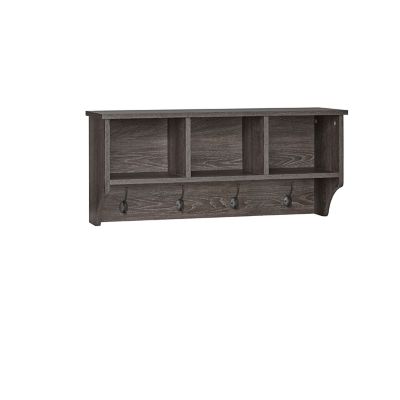
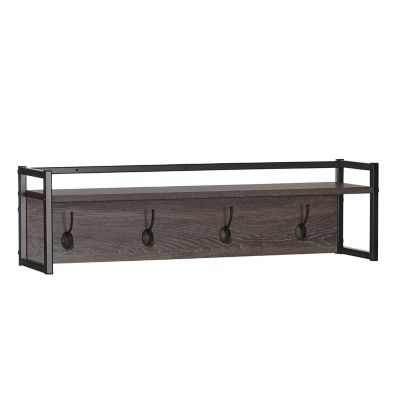
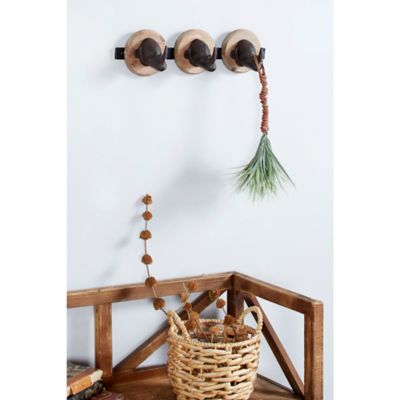
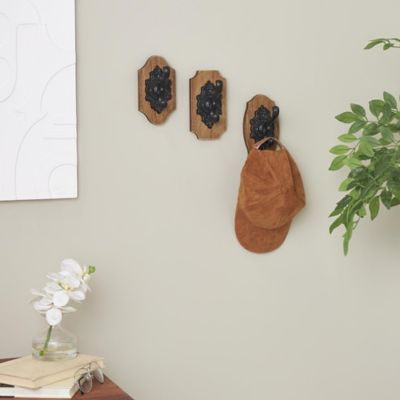
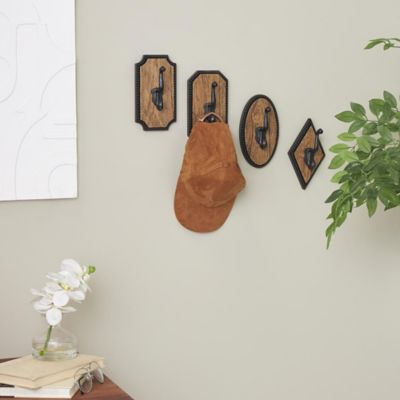
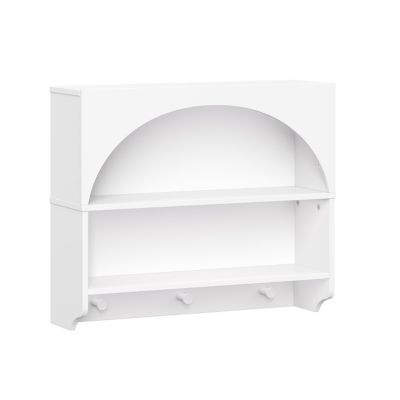
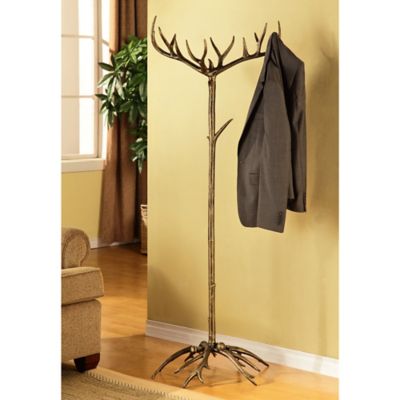
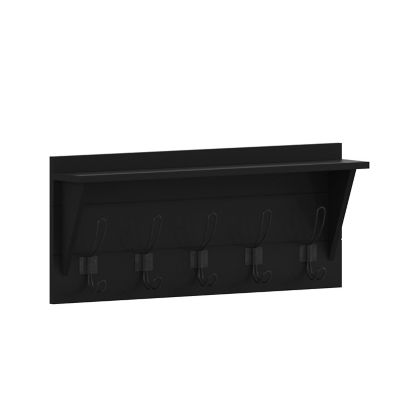
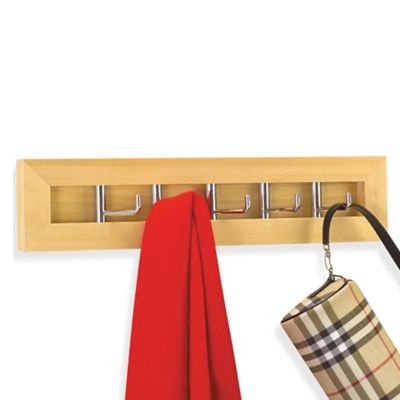
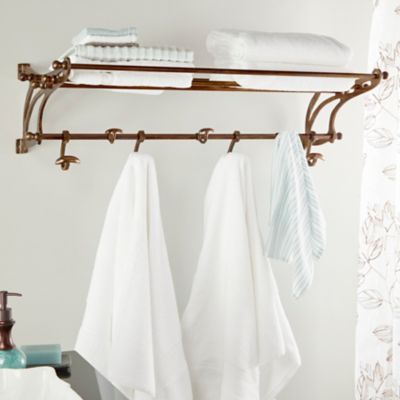
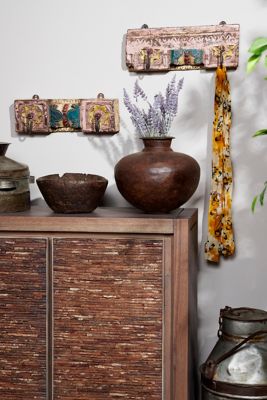
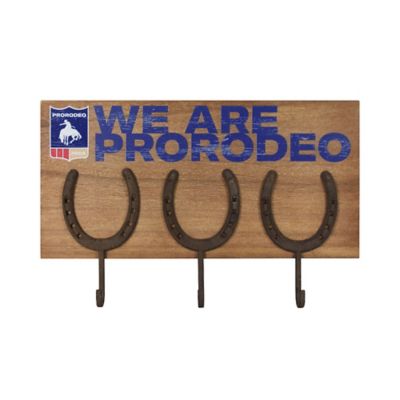
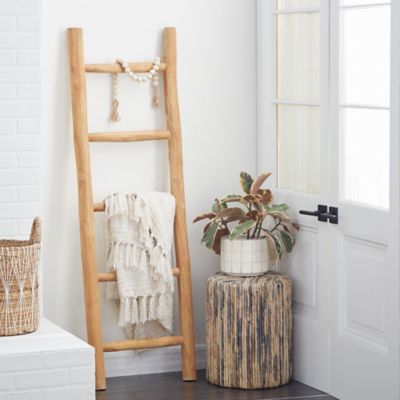
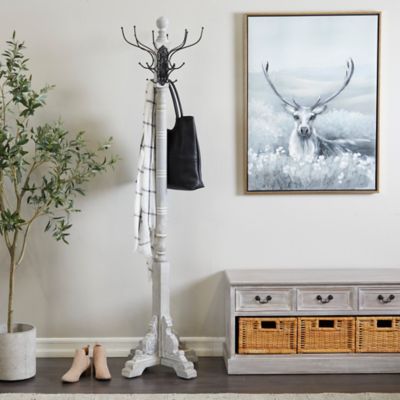
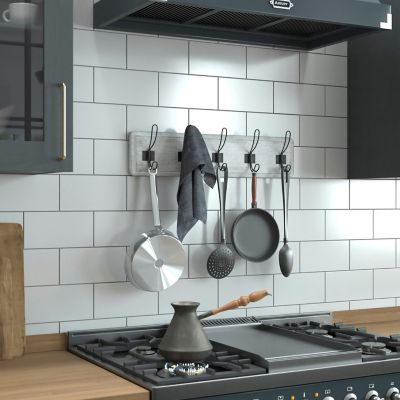
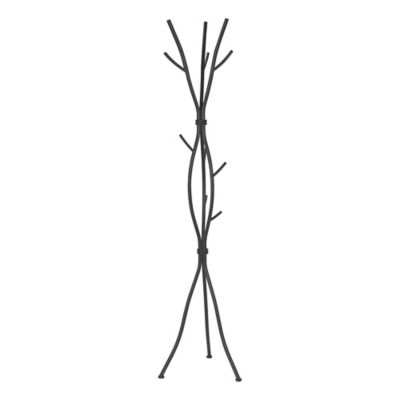
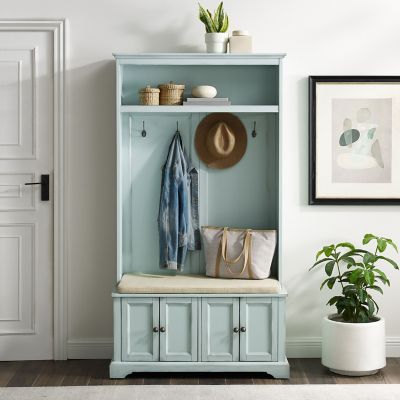
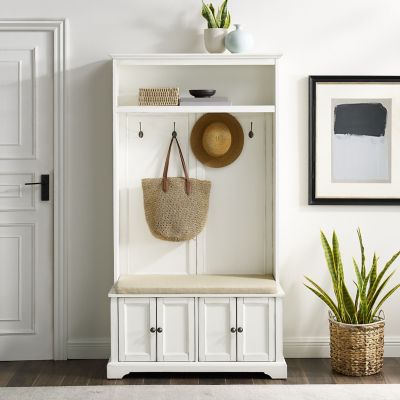
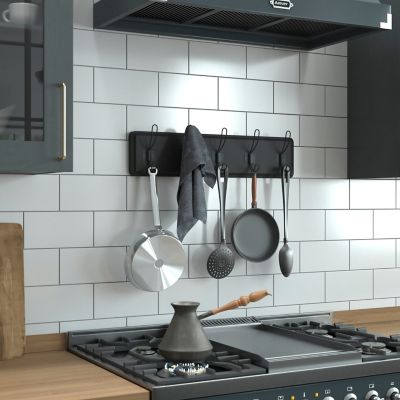
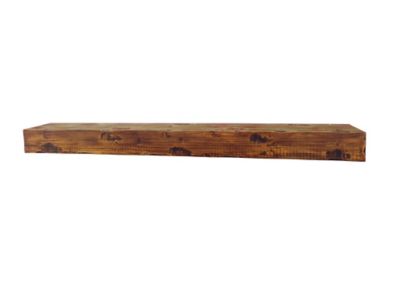
Rustic wall-mounted coat racks pair practical hanging space with the warmth of wood and the straightforward look of metal hardware. A plank-style back with a row of hooks fits naturally beside a farmhouse door, along a cabin hallway, or in a mudroom where work jackets and hats need a place to land. The appeal comes from familiar materials and visible character: wood grain, knots, distressed finishes, and dark metal that feels at home alongside a wooden bench or a pair of muddy boots. Solid pine often has noticeable knots and a lighter grain pattern, while oak offers a more pronounced grain and walnut tends toward deeper brown tones. Stain and finish can change those appearances considerably, so the overall color matters just as much as the wood species when matching existing trim or furniture. Engineered wood can provide a consistent backing and wood-look surface, though its care requirements and mounting details may differ from those of solid lumber. Reclaimed wood and live-edge boards bring additional variation in surface texture and outline; a finished surface without loose splinters matters wherever clothing might brush against it. Steel and cast iron hooks complement these wood styles, with shapes ranging from simple curved pegs to branching forms and wildlife-inspired details. A rack does not need an elaborate shape to make an entry feel pulled together. A narrow board with evenly spaced hooks can keep the focus on function, while a wider design with a top shelf gives the wall more presence. Rustic styling also works beyond an entryway. Near a laundry room, a rack can hold aprons and light bags; beside a bedroom door, it can keep robes and everyday layers off a chair. The best fit is a rack whose construction, hook arrangement, and finish suit the things that will hang there, rather than one chosen for appearance alone. That balance keeps the familiar, country-inspired look tied to a real job around the house.
Size and layout make a noticeable difference once a rustic wall-mounted coat rack becomes part of the daily routine. Overall width should suit the available wall space without crowding a door casing, light switch, or nearby cabinet. Depth deserves attention, too: a projecting hook or shelf can become an obstacle in a tight hallway, especially after bags and jackets are hanging from it. Hook count tells only part of the story. Hooks set close together may work well for caps and keys, but several roomy jackets need more space between hanging points to avoid piling into one another. Double hooks offer separate spots for a hat and a jacket, while broader, rounded ends are generally gentler on fabric than narrow or sharply pointed tips. Coat loops, bag straps, and hat bands all sit differently, so the hook shape should match the everyday load. Families may appreciate a lower row that children can reach, while an adult-height rack keeps longer clothing farther from the floor. There is no single mounting height that fits every household; reach, garment length, and clearance above a bench all play a part. Designs with shelves can make room for mail or a small basket, but the shelf depth and stated capacity should suit whatever sits on top. For a broader look at layouts that serve the same busy doorway,
Entryway Coat Racks offers another way to explore this type of wall storage. Mounting is just as important as the rack itself. Capacity depends on the rack, fasteners, wall material, and attachment method working together. Fastening into wall studs is often appropriate for heavier loads when the rack’s instructions call for it. Where studs do not align with the mounting points, anchors must be suitable for the wall construction and the expected load. Drywall, plaster, masonry, and wood walls can call for different hardware, and included fasteners are not automatically right for every surface. The manufacturer’s mounting directions and weight limits should govern the installation, including any separate limits for hooks and shelves.
Everyday care helps a rustic coat rack keep doing its job without losing the character that drew attention in the first place. Dust can gather along the top edge of a board, around hook bases, and underneath a shelf, so those spots benefit from an occasional wipe with a soft cloth. For finished wood, cleaning methods should follow the maker’s directions; a lightly damp cloth may be suitable for some finishes, while soaking the surface or scrubbing with harsh cleaners can damage others. Distressed surfaces are meant to show variation, but loose hardware, splintered edges, and flaking coatings are signs that need attention rather than part of the look. Metal hooks also deserve a quick check where they attach to the backing. Repeated pulling on a bag or dropping a heavy jacket onto the same hook can gradually loosen connections, making periodic inspection worthwhile. Damp clothing should not stay pressed against a wood backing for long stretches, and metal surfaces should be dried when needed to help limit corrosion. A household rack is generally better suited to clothing and everyday accessories than to heavy tools, feed bags, or equipment unless its stated capacity and intended purpose specifically allow those loads. In a working household, keeping that distinction clear helps the rack remain useful without asking it to do the job of shop storage. Rustic wall-mounted coat racks can also make thoughtful housewarming gifts for people settling into a farmhouse, cabin, or country home, provided the size and finish suit their space. Renters may need permission for wall mounting, while someone furnishing a narrow entrance may value a compact profile more than extra hooks. A simple wood-and-metal design can coordinate with painted beadboard, exposed timber, or plain walls without needing a fully matched room. Whether it catches a chore jacket by the back door or keeps visitors’ hats within reach, a well-chosen rack adds useful order while leaving floor space open.