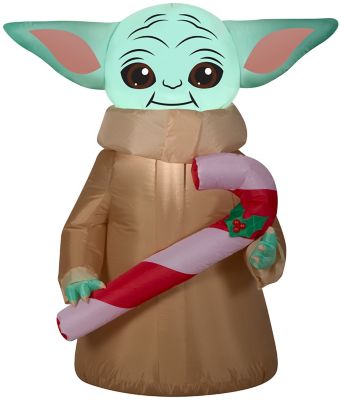
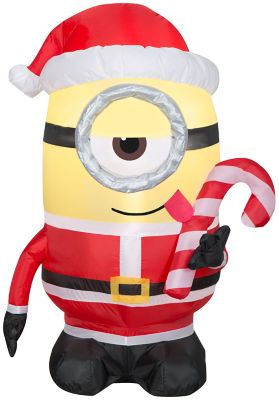
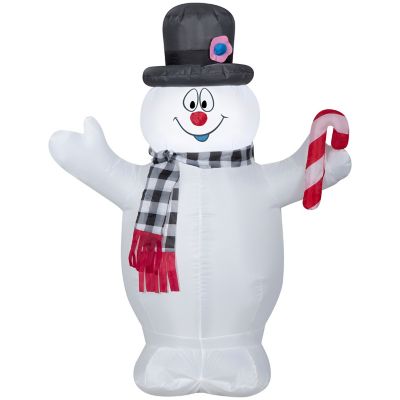
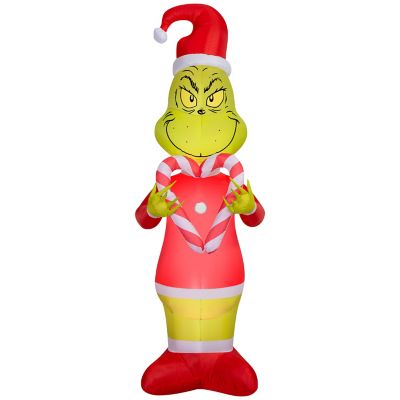
Candy cane inflatables come in hand-inflated styles around 4 feet tall and in larger, fan-powered outdoor styles that can stand 6 to 13 feet tall. A hand-inflated candy cane holds air behind a valve after filling and doesn’t need a fan running to keep its shape. A self-inflating style has a built-in blower that fills the fabric shell and keeps it upright while plugged in. Many fan-powered styles have built-in LED lights, so the red and white stripes still show after dark. Smaller air-filled styles can fit on a porch or in a sheltered spot, depending on what the label allows. Some are made for pool settings, but a lawn inflatable doesn’t belong in the water, and a pool-rated candy cane isn’t a flotation aid. For a Christmas display, the right size often comes down to where folks will see it. A shorter cane can make plenty of showing beside front steps, where visitors pass close enough to see the stripes. A taller one may be easier to spot from the road on a place with a long driveway or a broad stretch of front lawn. The curved top is part of the fit: it can reach farther to one side than the base, which matters under a porch roof or near low branches. Overall width and depth are worth a look along with height, especially if two canes will frame a walkway. The fabric and tie-down lines should sit clear of the space people need to carry packages, open a gate or get past with a snow shovel. For a bigger Christmas scene, the rounded hooks and stripes look right at home alongside
Christmas Tree Inflatables, with some open space between the shapes so each one stands out from the road.
The way a candy cane inflatable is built matters as much as how tall it stands. Fan-powered yard styles often have a lightweight polyester or nylon shell, sometimes with a coating to help shed moisture. Hand-inflated styles may have a vinyl shell with sealed seams and an air valve, more like a beach ball than a fabric lawn display. On a taller cane, look at where the tie-down loops sit and how they’re stitched into the shell. That’s where the fabric takes the pull when a breeze catches the curved top. A broad base can help the cane sit square, but it still needs the anchors called for in the instructions. A patch of level lawn usually makes it easier to set stakes than gravel or frozen ground; a porch or patio calls for a style that allows a suitable way to secure it without stakes. Placement is also about what’s around the inflatable. A wire fence end, thorny shrub or rough brick corner can wear a spot in the shell if the cane rubs against it. Even a roomy lawn can be a poor fit if the best-looking spot is right where a plow piles snow or where a downspout drains. For a plug-in style, check the outdoor rating, cord reach and location of a GFCI-protected outlet before settling on a spot. A lit display beside the drive can be welcoming, but the cord and anchor lines belong away from foot traffic and tires. Built-in lights give the cane its own glow; an unlit style can still be easy to see where a porch light already reaches. Candy cane inflatables can make a fitting gift for someone who puts up a Christmas display every year. A compact one may suit a neighbor with a small front yard, while a tall, lighted cane makes more sense for a household with open lawn, room for anchors and an outlet close enough to reach.
Good care starts with knowing how the inflatable behaves when it’s off. A hand-inflated cane stays up until air escapes or the valve is opened, while a fan-powered model settles onto the ground when the blower stops. That makes the area beneath it worth checking as well as the space above it. A soft patch of grass with no sharp sticks or stones is kinder to the shell than a gravel edge, especially if the cane will deflate there night after night. Leaves and loose snow can cover the blower intake on a yard model, and a tall cane can take quite a pull in an exposed spot. Follow the maker’s limits for wind and precipitation, and bring the inflatable in when conditions call for it. A sheltered corner may make a better home than the middle of an open yard, as long as the fabric has room to move without catching on siding or a railing. When it’s time to pack the display away, a soft cloth can lift off ordinary dirt if the care directions allow it. Let the shell dry completely before folding, especially around seams and low folds where water can linger after the outside feels dry. A dry storage spot away from sharp-edged tools helps keep the fabric ready for another Christmas, and keeping stakes and lines together saves a search when it’s time to set up again. It’s worth thinking about storage space when choosing a size, too: a small hand-inflated cane may fold down neatly, while a taller lighted style needs room for its blower and cord as well as the shell. Whether it greets family at the porch or stands out past the fence line, a candy cane inflatable works best where its shape can be seen clearly and there’s enough room around it for everyday comings and goings.