


8x42 vs. 10x42 Binoculars for Bird Watching
Find your fit for feeder watching, busy branches and birds across the pond: easier handheld viewing or a little more reach.
Quick Take: Which Fits Your Bird Watching?
-
Start with 8x42 when
You mostly watch nearby feeders, shrubs and trees, or want a more forgiving handheld view while learning to find and follow birds.
-
Consider 10x42 when
You regularly watch birds across open fields or water and can keep the larger image steady enough to enjoy the added magnification.
-
Check the model details when
You wear glasses, share binoculars with family or watch a feeder close to the porch. Eye relief, eye-spacing adjustment and close focus matter, too.
More magnification is not always the better pick for backyard bird watching. An 8x42 pair generally makes hand shake less noticeable and often gives you a wider view for finding birds in trees and around feeders. A 10x42 pair makes distant birds appear larger, which can help when you are looking across a pasture or pond. Both have 42 mm objective lenses; the right choice comes down to your usual viewing spot, how steadily you hold them and the details of each model.
Product comparison
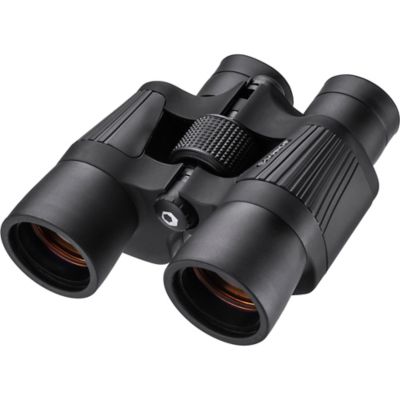
|
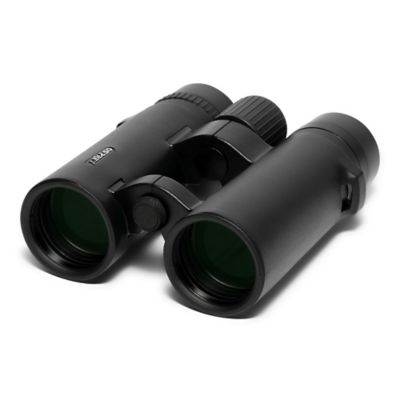
|
|
|---|---|---|
| What to Compare | ||
| Magnification | 8x | 10x |
| Objective lens diameter | 42 mm | 42 mm |
| Apparent image scale | A smaller apparent image of the bird than at 10x. | A larger apparent image of the same bird from the same viewing spot. |
| Visible hand shake | Lower magnification makes hand movement less noticeable. | Higher magnification also makes hand movement more noticeable. |
| Field of view | Often wider than a comparable 10x design; confirm the model's specification. | Often narrower than a comparable 8x design; confirm the model's specification. |
| Calculated exit pupil | 5.25 mm: 42 divided by 8. | 4.2 mm: 42 divided by 10. |
| Typical viewing priority | Finding and following birds around feeders, branches and nearby cover. | Viewing birds along longer sight lines across fields, ponds and open ground. |
The featured products illustrate the two magnification formats. General viewing tradeoffs are not results from a side-by-side optical test or a statement of either model's exact field of view, close focus, eye relief or weather protection. Zero rating values do not represent customer scores.
Let Your Yard Help You Choose
If birds spend most of their time hopping between the feeder and nearby branches, start by considering 8x42 binoculars. Lower magnification is easier to hold steady, and a wider field of view gives you more room to locate a bird before it moves again. Viewing width varies by design, though, so not every 8x pair is wider than every 10x pair.
For birds perched along a distant fence line or resting across a pond, 10x42 binoculars can be worth a look. The larger apparent image can help you examine markings from farther away. That advantage depends on keeping the view steady: more magnification does not automatically mean more visible detail in your hands.
What the Numbers Tell You—and What They Do Not
The first number is magnification. The second is the diameter of the front objective lenses in millimeters, so both formats have 42 mm objectives. Divide that diameter by magnification to calculate the exit pupil, the small circle of light leaving each eyepiece: 5.25 mm for 8x42 and 4.2 mm for 10x42.
The larger exit pupil of an 8x42 pair can make eye placement more forgiving and may help in dim light when your pupils open wide enough to benefit. It is not a guarantee of a brighter view. Lens coatings, light transmission, optical design and your own eyes all play a part.
Pick the Pair You Can Watch With Comfortably
Before choosing, compare close focus with the distance to your nearest feeder. If you keep your glasses on, check eye relief and eyecup adjustment. For a pair the family will share, also consider the eye-spacing adjustment range, weight, balance and how easily each person can reach the focus wheel.
If you can try both formats, view the same stationary subject, then follow a moving bird. Notice how quickly you find it and how much the image moves. Lean toward 8x42 when easier handling helps you stay with the action; consider 10x42 when its larger image stays comfortable and steady.
Explore 8x42 Binoculars
Compare options for a forgiving handheld view around feeders, shrubs and nearby trees.
Explore 10x42 Binoculars
Take a closer look at options for birds across ponds, pastures and longer sight lines.
Tips for Finding Birds and Keeping the View Steady
-
Locate the bird with your eyes first. Keep looking at that spot as you raise the binoculars, rather than searching through the eyepieces.
-
Adjust the barrels until you see one clear circle, then set the diopter and focus according to the manufacturer's directions.
-
Tuck your elbows close to your body or rest them on a steady surface to reduce movement, especially with 10x magnification.
-
Compare field-of-view figures at the same stated distance. The magnification label alone does not tell you how much of the scene you will see.
Frequently asked questions
These labels normally describe fixed magnification: 8x for one format and 10x for the other. Turning the focus wheel sharpens the image rather than changing magnification. A zoom binocular lists a magnification range in its specifications.
Field of view is how much of the scene you can see without moving the binoculars. A wider view gives you more surrounding branches or shoreline to work with when finding and following a bird. Compare figures in degrees or widths measured at the same distance.
Eye relief is the distance behind the eyepiece where your eye can see the full view. Glasses hold your eyes farther from the lenses, so sufficient eye relief matters. Adjustable eyecups help position your eyes, but the best setting depends on the binoculars and your glasses.
The diopter adjustment accounts for differences between your eyes. Set it following the manufacturer's instructions, then turn the main focus wheel as your viewing distance changes. If family members share a pair, each person may need to reset the diopter.
Close focus tells you the nearest distance at which the binoculars can bring a subject into focus. Compare that specification with the distance from your usual seat or window to the feeder. Magnification alone does not tell you whether a nearby bird will come into focus.