[Christmas](https://www.tractorsupply.com/tsc/catalog/christmas)[Halloween](https://www.tractorsupply.com/tsc/catalog/halloween)[Pet](https://www.tractorsupply.com/tsc/category/pet)[Lawn & Garden](https://www.tractorsupply.com/tsc/category/lawn-garden)[Truck & Automotive](https://www.tractorsupply.com/tsc/catalog/truck-automotive)[Sporting Goods](https://www.tractorsupply.com/tsc/category/sporting-goods)[Horse](https://www.tractorsupply.com/tsc/category/horse)[Farm & Ranch](https://www.tractorsupply.com/tsc/category/farm-ranch)[Clothing](https://www.tractorsupply.com/tsc/category/clothing)[Livestock](https://www.tractorsupply.com/tsc/catalog/livestock)[Pet & Animal Pharmacy](https://www.tractorsupply.com/tsc/category/pet-animal-pharmacy)[Tools](https://www.tractorsupply.com/tsc/category/tools)[Poultry](https://www.tractorsupply.com/tsc/category/poultry)[Fencing & Gates](https://www.tractorsupply.com/tsc/category/fencing-gates)[Home Improvement](https://www.tractorsupply.com/tsc/category/home-improvement)[Outdoor Living](https://www.tractorsupply.com/tsc/category/outdoor-living)[Heating & Cooling](https://www.tractorsupply.com/tsc/category/heating-cooling)[Home Decor & Furniture](https://www.tractorsupply.com/tsc/category/home-decor-furniture)[Outdoor Power Equipment](https://www.tractorsupply.com/tsc/category/outdoor-power-equipment)[Trailers & Towing](https://www.tractorsupply.com/tsc/category/trailers-towing)[Boots & Shoes](https://www.tractorsupply.com/tsc/category/boots-shoes)[Wild Birds & Wildlife](https://www.tractorsupply.com/tsc/category/wild-birds-wildlife)[Toys](https://www.tractorsupply.com/tsc/category/toys)[Gift Cards](https://www.tractorsupply.com/tsc/catalog/gift-cards-3074457345616710669-1)[Services](https://www.tractorsupply.com/tsc/services) [Propane Refill](https://www.tractorsupply.com/tsc/services/propane-refill-Franklin-TN-37069-2314)[Trailer Rental](https://www.tractorsupply.com/tsc/services/trailer-rental)[Garden Center](https://www.tractorsupply.com/tsc/services/garden-center-Franklin-TN-37069-2314)[Feed Center](https://www.tractorsupply.com/tsc/services/feed-center-Franklin-TN-37069-2314)[Same Day Delivery](https://www.tractorsupply.com/tsc/services/same-day-delivery)[PetVet Clinic](https://www.tractorsupply.com/tsc/services/petvet)[Pet Wash](https://www.tractorsupply.com/tsc/services/pet-wash)[Grooming at Petsense](https://www.tractorsupply.com/tsc/services/grooming-at-petsense)[Dog Training at Petsense](https://www.petsense.com/pages/training)[Tractor Supply Rx](https://www.tractorsupply.com/tsc/category/pet-animal-pharmacy)[Pet Insurance](https://quote.petted.com/quote/ref=tractor?cm_sp=Navi-_-Pet%20L1-_-Insurance)[Wag!](https://wagwalking.com/partners/tractor-supply?isIntSrch=written)
"Savings and Offers"
[Weekly Ad](https://www.tractorsupply.com/tsc/cms/digital-flyer)[Sale](https://www.tractorsupply.com/tsc/sale)[Clearance](https://www.tractorsupply.com/tsc/clearance)
"More Options"
[Weekly Ad](https://www.tractorsupply.com/tsc/cms/digital-flyer)[What's New](https://www.tractorsupply.com/tsc/whatsnew)[Tractor Supply App](https://www.tractorsupply.com/tsc/cms/app)[Earn Rewards with Neighbor's Club](https://www.tractorsupply.com/tsc/cms/neighbors-club)[Hometown Heroes](https://www.tractorsupply.com/tsc/myaccount/herobenefits)[Life Out Here Blog](https://www.tractorsupply.com/tsc/cms/life-out-here)[TSC Exclusive Brands](https://www.tractorsupply.com/tsc/cms/exclusive-brands)[Top Brands](https://www.tractorsupply.com/tsc/brands)[Clearance Items](https://www.tractorsupply.com/tsc/clearance)[Battery Finder](https://tractorsupply.interstatebatteries.com/?cm_sp=Header-_-Shop-_-Battery_Finder)[Outdoor Power Equipment Parts Finder](http://www.ordertree.com/tsc/?cm_sp=Header-_-Shop-_-Parts_Finder)[Hitch Finder](https://www.reesetowpower.com/tractor-supply/?cm_sp=Header-_-Shop-_-Hitch_Finder)
Spend $49.99 to unlock Free Delivery on most orders
|
[Learn More](https://www.tractorsupply.com)
[Order status](https://www.tractorsupply.com/tsc/orders?orderlookuppage)[TSC Credit Cards](https://www.tractorsupply.com/tsc/cms/credit)[What’s new](https://www.tractorsupply.com/tsc/whatsnew)[Petsense](https://www.petsense.com/)[Weekly Ad](https://www.tractorsupply.com/tsc/cms/digital-flyer)
[](https://www.tractorsupply.com)
[](https://www.tractorsupply.com/)
Grassland (Franklin) TN
GRASSLAND (FRANKLIN) TN #2314
[2176 Hillsboro RD STE 122
Franklin, TN 37069](https://www.google.com/maps/search/?api=1&query=Tractor%20Supply%20Co.%201650%20Denmark%20RD%2CUnion%2CMO%2063084)
Open at 9:00 am
615-595-5700
Store Hours:
[Details](https://www.tractorsupply.com/tsc/store_Franklin-TN-37069_2314)
Grassland (Franklin) TN
Open till 7 pm
Deliver to
37027
Ask ScoutAI
Sign In / EnrollGet rewarded!
Sign In / EnrollGet rewarded!
[](https://www.tractorsupply.com/tsc/cart)
Ask ScoutAI
[Christmas](https://www.tractorsupply.com/tsc/catalog/christmas)
[Halloween](https://www.tractorsupply.com/tsc/catalog/halloween)
[Pet](https://www.tractorsupply.com/tsc/category/pet)
[Lawn & Garden](https://www.tractorsupply.com/tsc/category/lawn-garden)
[Truck & Automotive](https://www.tractorsupply.com/tsc/category/truck-automotive)
[Sporting Goods](https://www.tractorsupply.com/tsc/category/sporting-goods)
[Horse](https://www.tractorsupply.com/tsc/category/horse)
[Farm & Ranch](https://www.tractorsupply.com/tsc/category/farm-ranch)
[Clothing](https://www.tractorsupply.com/tsc/category/clothing)
[Livestock](https://www.tractorsupply.com/tsc/category/livestock)
[Pet & Animal Pharmacy](https://www.tractorsupply.com/tsc/category/pet-animal-pharmacy)
[Tools](https://www.tractorsupply.com/tsc/category/tools)
[Poultry](https://www.tractorsupply.com/tsc/category/poultry)
[Fencing & Gates](https://www.tractorsupply.com/tsc/category/fencing-gates)
[Home Improvement](https://www.tractorsupply.com/tsc/category/home-improvement)
[Outdoor Living](https://www.tractorsupply.com/tsc/category/outdoor-living)
[Heating & Cooling](https://www.tractorsupply.com/tsc/category/heating-cooling)
* * *
[Menu](https://www.tractorsupply.com)
Search
[Home](https://www.tractorsupply.com/)
Sign In
[Cart](https://www.tractorsupply.com/tsc/cart)
[__Deals to start the season off right -__ Shop now>](https://www.tractorsupply.com/tsc/cms/digital-flyer)
* * *
CATEGORIES
Pets
- [Dogs](https://www.tractorsupply.com/tsc/cms/life-out-here/pet/dogs)
- [Cats](https://www.tractorsupply.com/tsc/cms/life-out-here/pet/cats)
- [All](https://www.tractorsupply.com/tsc/cms/life-out-here/pet)
The Barn
- [Horse](https://www.tractorsupply.com/tsc/cms/life-out-here/the-barn/horse)
- [Livestock](https://www.tractorsupply.com/tsc/cms/life-out-here/the-barn/livestock)
- [Goats & Sheep](https://www.tractorsupply.com/tsc/cms/life-out-here/the-barn/goats-and-sheep)
- [Pigs](https://www.tractorsupply.com/tsc/cms/life-out-here/the-barn/pigs)
- [All](https://www.tractorsupply.com/tsc/cms/life-out-here/the-barn)
The Coop
- [Start Your Flock](https://www.tractorsupply.com/tsc/cms/life-out-here/the-coop/start-your-flock)
- [Poultry Breeds](https://www.tractorsupply.com/tsc/cms/life-out-here/the-coop/poultry-breeds)
- [Coop Tips](https://www.tractorsupply.com/tsc/cms/life-out-here/the-coop/coop-tips)
- [Chick Care](https://www.tractorsupply.com/tsc/cms/life-out-here/the-coop/chick-care)
- [All](https://www.tractorsupply.com/tsc/cms/life-out-here/the-coop)
Garden
- [Gardening Tips](https://www.tractorsupply.com/tsc/cms/life-out-here/garden/gardening-tips)
- [Growing Guides](https://www.tractorsupply.com/tsc/cms/life-out-here/garden/growing-guides)
Home & Land
- [Fresh Recipes](https://www.tractorsupply.com/tsc/cms/life-out-here/garden-home-land/fresh-recipes)
- [Heating & Cooling](https://www.tractorsupply.com/tsc/cms/life-out-here/garden-home-land/heating-and-cooling)
- [Bees](https://www.tractorsupply.com/tsc/cms/life-out-here/garden-home-land/bees)
- [Lawn](https://www.tractorsupply.com/tsc/cms/life-out-here/garden-home-land/lawn)
- [Fencing](https://www.tractorsupply.com/tsc/cms/life-out-here/garden-home-land/fencing)
- [All](https://www.tractorsupply.com/tsc/cms/life-out-here/garden-home-land)
Tool Shop
- [The Garage](https://www.tractorsupply.com/tsc/cms/life-out-here/tool-shop/the-garage)
- [Tool Tips](https://www.tractorsupply.com/tsc/cms/life-out-here/tool-shop/tool-tips)
- [Stock Your Shop](https://www.tractorsupply.com/tsc/cms/life-out-here/tool-shop/stock-your-shop)
- [All](https://www.tractorsupply.com/tsc/cms/life-out-here/tool-shop)
Outdoor Life
- [Birding](https://www.tractorsupply.com/tsc/cms/life-out-here/outdoor-life/birding)
- [Recreation](https://www.tractorsupply.com/tsc/cms/life-out-here/outdoor-life/recreation)
- [Hunting](https://www.tractorsupply.com/tsc/cms/life-out-here/outdoor-life/hunting)
- [All](https://www.tractorsupply.com/tsc/cms/life-out-here/outdoor-life)
1. [Home](https://www.tractorsupply.com/tsc/cms/life-out-here)
2. [The Coop](https://www.tractorsupply.com/tsc/cms/life-out-here/the-coop)
3. [Poultry Breeds](https://www.tractorsupply.com/tsc/cms/life-out-here/the-coop/poultry-breeds)
4. Rustic Rock Breed Guide
# Rustic Rock Breed Guide
Feb 18, 2026
[Erica Lynn Geller](https://www.tractorsupply.com)
# __Rustic Rock Breed Guide__
If you’re looking for a [poultry breed](https://www.tractorsupply.com/tsc/cms/life-out-here/the-coop/poultry-breeds) that checks the boxes for classic farm charm, calm demeanor and a reputation for reliable laying, the Rustic Rock may be a perfect fit. Add to that list their striking plumage, and it’s easy to see why these birds are favorites among backyard keepers. In this chicken breed guide from Tractor Supply, we dive into what you need to know about this breed, from their history and distinctive looks to their personality and routine care.
#### Quick Facts
- __Breed type:__ Dual-purpose (egg and meat)
- __Egg color:__ Brown
- __Pen or free-range:__ Both
- __Temperament:__ Calm, friendly and easy to handle
#### __Rustic Rock quick facts:__
- #### __Lifespan:__ 6-8 years
- #### __Weight:__ Females (hens): 6-7 lb.; Males (roosters): 8-9 lb.
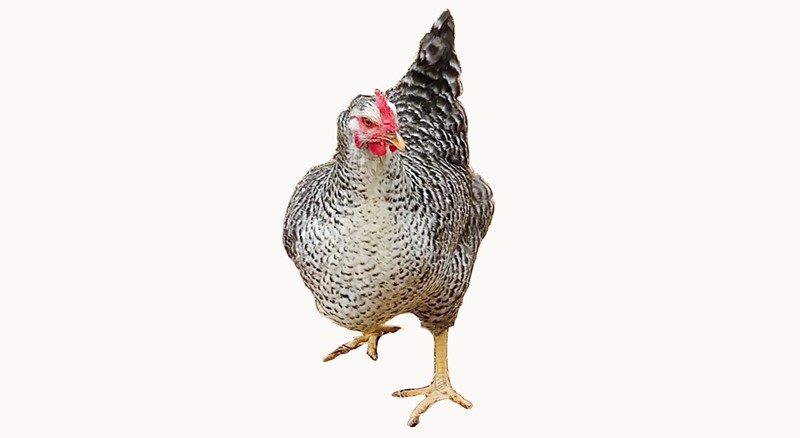
- #### __Appearance:__ Black and white barred feathers, bright red comb (a mix of Barred Rocks and Rhode Island Reds)
- #### __Egg production:__ 200-250 eggs per year
- __Good for beginners:__ Yes
#### Key Takeaways
- Rustic Rocks are calm, friendly and tolerant of handling, making them ideal chickens for beginners and mixed flocks.
- They thrive in a variety of climates and adapt to common environmental challenges, including colder climates.
- This breed offers both generous egg production and meat potential, making it dual-purpose and practical for homesteads.
- With routine feeding, clean housing and preventative health checks, they remain healthy and productive with minimal fuss.
### __History of Rustic Rock Chickens__
The Rustic Rock is a hybrid breed that was developed through selective breeding to combine the most desirable traits of multiple chicken lines. Bred primarily for backyard coops and small-scale farms, they were created to be hardy, productive and easy to manage. With a lineage that includes heritage breeds Barred Plymouth Rocks and Rhode Island Reds, which are known for their calm temperament, resilience and reliable egg-laying abilities, these birds excel both in the coop and on the range.
Though it doesn’t have the long history as some other chicken breeds, that hasn’t stopped keepers from valuing these birds. Rustic Rocks have quickly gained popularity for their versatility. The breed’s balanced genetics give it dual-purpose qualities, meaning both [egg](https://www.tractorsupply.com/tsc/catalog/chickens?filter=mp%7CEgg%20Laying) and [meat](https://www.tractorsupply.com/tsc/catalog/chickens?filter=mp%7CMeat%20Production) production, while still having a friendly and adaptable personality. They are prized by beginners and seasoned keepers, making them great additions to coops of all sizes.
### __Temperament and Good-to-Knows__
In addition to being prized for their dual production, Rustic Rocks make great additions to coops because of how easy they are to get on with. Their steady disposition and practical nature make them a reliable choice for keepers who want a flock that’s manageable, adaptable and drama-free. Here is a closer look at the temperament of Rustic Rock chickens:
#### Calm and Even Nature
One trait that makes Rustic Rocks so desirable among poultry enthusiasts is their calm, steady temperament. Their friendly demeanor transitions well to human interaction. While they may not be lap chickens, they tolerate handling and often become more personable with regular interaction.
#### Flock Behavior and Compatibility
Rustic Rocks are not overly aggressive, skittish or territorial. Their balanced, non-dominant personalities allow them to be easily integrated into mixed flocks without needing to worry about aggression or stress, as is the case with other breeds. These birds usually hold their own without bullying others, making them a solid middle-ground breed when managing flock dynamics. They do best with structure and routine, which helps minimize stress and pecking-order disputes.
#### Hardiness and Adaptability
Well-suited for a variety of climates, Rustic Rocks perform especially well in colder climates and adapt to less-than-ideal weather better than most chickens. They can do this thanks to their sturdy builds and dense feathering, which adds to their resilience. When given access to fields and other outdoor areas, these chickens are highly capable foragers, which allows them to supplement their diet and fulfill their natural instincts.
__Expert tip:__ Spending time with your Rustic Rocks while they are young helps reinforce their naturally calm, even temperament. Exposure at an early age makes them easier to handle and manage as mature chickens.
### __Physical and Egg Characteristics__
Bred with practicality in mind, Rustic Rocks chickens combine a sturdy body type with reliable egg production. Their appearance and laying habits reflect their purpose as a hardworking, dual-purpose breed suited for a variety of flock setups. This makes the breed particularly attractive to anyone seeking sustainability and efficiency.
#### Physical Traits
Boasting broad, well-balanced bodies, Rustic Rocks are held up by their strong legs, giving them a solid frame. They are considered fast-growing, and their rapid development supports their dual-purpose nature, maturing well for both meat and egg production.
Depending on diet, genetics and overall health, roosters usually weigh between 8-9 pounds, and hens weigh 6-7 pounds on average. Their overall build gives them a grounded and noticeable presence in the coop and yard.
Rustic Rock chickens are striking to see in person. Their plumage often resembles classic Rock-style coloring, which is barred or dark patterns of black and white feathers that provide both visual appeal and natural camouflage. They have single combs that are easy to monitor for health and frostbite in colder climates.
#### Egg Production
This chicken breed is valued for its consistent laying, producing a steady supply of medium- to large-brown eggs throughout the year. It’s important to know that production tends to slow during peak winter months. While they don’t pump out extreme production numbers, typically giving you between 200-250 eggs per year, the same way other dedicated egg layers do, they make up for it with consistency and quality.
__Expert tip:__ Providing extra calcium through crushed oyster shells helps hens maintain strong eggshells, especially during peak laying periods (spring/summer with longer daylight hours).
### __Health and Care__
Thanks to their strong genetics and thoughtful breeding lineage, Rustic Rocks are generally resistant to common poultry ailments, but that doesn’t mean they are completely immune. Similar to all chickens, they are susceptible to parasites, respiratory issues and nutritional deficiencies. Observing behavior, appetite and egg quality helps catch potential issues early.
Even though they are hardy birds, Rustic Rock chickens still require consistent care to keep them healthy and productive. Proper housing, nutrition and routine care help this breed thrive with minimal intervention.
#### Housing and Environment
Good health starts in the [coop](https://www.tractorsupply.com/tsc/catalog/coops-pens), which is why it’s critical to provide your chickens with clean, dry and properly ventilated housing. Rustic Rocks appreciate adequate space that prevents stress and overcrowding, which can lead to the spread of illnesses and pecking issues. [Bedding](https://www.tractorsupply.com/tsc/catalog/poultry-bedding) should be changed regularly, and [nesting boxes](https://www.tractorsupply.com/tsc/catalog/poultry-nesting-boxes) kept clean to reduce the risk of mites and bacteria.
#### Nutrition and Hydration
Chickens are only as good as their [feed](https://www.tractorsupply.com/tsc/catalog/poultry-feed), and Rustic Rocks need a diet that changes as they mature. The following plan is recommended: a high-protein starter (20-24%) for chicks, transitioning to a grower feed (16-20%) until about 18 weeks, then a layer feed (14-16%) with extra calcium for laying hens. Providing the occasional [poultry treat](https://www.tractorsupply.com/tsc/catalog/poultry-treats) can add nutritional value to diets. Furthermore, access to fresh water at all times is critical, especially during hot weather or during periods of peak laying.
#### Preventive Care
A proper poultry care routine goes a long way in maintaining the [health and wellness](https://www.tractorsupply.com/tsc/catalog/poultry-health-wellness) of your Rustic Rocks. Routine parasite checks, occasional coop clean-outs and seasonal health assessments keep this breed in top condition. If you’re ever unsure about the health of a chicken, immediately isolate the bird to prevent disease spread and observe closely for symptoms, such as lethargy, ruffled feathers or discharge, then contact a veterinarian for professional diagnosis and treatment.
__Expert tip:__ Allow your Rustic Rocks to forage, either in a controlled, secure environment or freely in an open range, as this adds enrichment to their routine and supports natural digestive health.
### __Care for Your Flock of Rustic Rocks and Other Birds with Essentials from Tractor Supply__
Rustic Rock chickens are more than just a practical choice – they’re a reliable, low-maintenance breed for anyone who wishes to benefit from a balanced, productive flock. These birds fit seamlessly into Life Out Here, bringing both charm and functionality to your backyard or farm.
If you’re ready to give chicken keeping a try or need to upgrade your current setup, turn to America’s largest rural lifestyle retailer, Tractor Supply. Our [poultry selection](https://www.tractorsupply.com/tsc/category/poultry) includes essential equipment and convenient accessories, making the daily rhythms of homestead life simpler and more rewarding. Get started today by visiting your [local Tractor Supply store](https://www.tractorsupply.com/tsc/store-locator) or shopping our full inventory online.
### __Frequently Asked Questions About Rustic Rock Chickens__
__Are Rustic Rocks beginner-friendly chickens?__
Yes. Their calm temperament, hardiness and adaptability make them great choices for anyone new to chicken keeping. They’re usually easy to handle and don’t require special attention beyond standard chicken care.
__How many eggs do Rustic Rock hens lay?__
Expect a steady supply of medium- to large-brown eggs, averaging 200-250 per year. Production usually slows in the winter but remains consistent overall.
__Do Rustic Rock chickens get along well with other breeds?__
Yes, Rustick Rocks are known to get along with other chicken breeds. Their even-tempered nature lets them integrate smoothly with other birds, so you can mix and match breeds to create your ideal flock.
Get the top deals, latest trends and more
Sign up for emails from Tractor Supply today.
First Name*
First Name*
Last Name*
Last Name*
Email*
Email*
Sign Up
### Customer Support
- [Order Status](https://www.tractorsupply.com/tsc/orders?orderlookuppage)
- [Return Policy](https://www.tractorsupply.com/tsc/customer-solutions#ProductReturns)
- [Delivery Options](https://www.tractorsupply.com/tsc/customer-solutions#DeliveryOptions)
- [Tax Exemptions](https://www.tractorsupply.com/tsc/cms/policies-information/customer-solutions/tax-exemption)
- [Frequently Asked Questions](https://www.tractorsupply.com/tsc/customer-solutions#CustomerFAQ)
- [Contact Us](https://www.tractorsupply.com/tsc/customer-solutions#contact)
- [Recall Notices](https://www.tractorsupply.com/tsc/cms/policies-information/customer-solutions/recall-notices.html)
- Call:
(877) 718-6750
- [](https://www.tractorsupply.com)
Mon - Sat: 7am - 9pm CT
- [](https://www.tractorsupply.com)
Sun: 8am - 7pm CT
- [](https://www.tractorsupply.com)
Closed Christmas Day
### About Us
- [Who We Are](https://corporate.tractorsupply.com/company-overview/company-profile/default.aspx)
- [Investor Relations](https://ir.tractorsupply.com/CorporateProfile)
- [Stewardship](https://corporate.tractorsupply.com/stewardship/overview/default.aspx)
- [Community](https://ir.tractorsupply.com/Peer)
- [Military Support](https://www.tractorsupply.com/tsc/cms/military)
- [Product Catalog](https://www.tractorsupply.com/a/pt/index)
- [Tractor Supply Stores](https://www.tractorsupply.com/tsc/store-locator)
- [.Pharmacy Verified Website](https://tractorsupply.com/tsc/cms/accreditation)
### Work With Us
- [Careers](https://www.tractorsupply.careers/?utm_source=corpsite&utm_campaign=TSC_Shop&cm_sp=footer-_-tsc%20careers)
- [Sponsorship](https://www.tractorsupply.com/tsc/cms/policies-information/about-tsc/sponsorships)
- [Affiliate Program](https://www.tractorsupply.com/tsc/cms/policies-information/affiliate-program)
- [Potential Vendor Partners](https://www.tractorsupply.com/tsc/cms/policies-information/vendor-information/potential-vendor-partners)
- [Vendor Information](https://www.tractorsupply.com/tsc/cms/policies-information/vendor-information/vendor-center)
- [Tractor Supply Media Network](https://www.tractorsupplymedianetwork.com/)
### Neighbor's Club
- [About](https://www.tractorsupply.com/tsc/cms/neighbors-club)
- [Rewards](https://www.tractorsupply.com/AccountDashboardView?catalogId=10051&langId=&storeId=10151&topNav=nCOfferReward%3Fcm_sp%3Dfooter-_-navigation-_-Neighbors%20Club%20Member)
- [Hometown Heroes](https://www.tractorsupply.com/tsc/myaccount/herobenefits)
- [Frequently Asked Questions](https://www.tractorsupply.com/tsc/cms/neighbors-club-faq)
- [Terms & Conditions](https://www.tractorsupply.com/tsc/cms/neighbors-club-terms-and-conditions)
### Credit Center
- [TSC Credit Card](https://www.tractorsupply.com/tsc/cms/credit)
- [Klarna](https://www.tractorsupply.com/tsc/cms/klarna)
### Stay Connected
Connect & Share with the Tractor Supply Community.
- [](https://www.facebook.com/TractorSupplyCo?cm_sp=footer-_-social%20icons-_-facebook)
- [](https://www.pinterest.com/tractorsupplyco?cm_sp=footer-_-social%20icons-_-pinterest)
- [](https://instagram.com/tractorsupply?cm_sp=footer-_-social%20icons-_-instagram)
- [](https://www.youtube.com/user/TSCTractorSupply?cm_sp=footer-_-social%20icons-_-youtube)
- [](https://www.tiktok.com/@tractorsupply?cm_sp=footer-_-social%20icons-_-tiktok)
### Tractor Supply App
Shop on the go with the Tractor Supply App
[Learn More](https://www.tractorsupply.com/tsc/cms/app.html)
[](https://apps.apple.com/us/app/id1502197298)
[](https://play.google.com/store/apps/details?id=com.consumerapp_v1)
### Stay Connected
Connect & Share with the Tractor Supply Community.
- [](https://www.facebook.com/TractorSupplyCo?cm_sp=footer-_-social%20icons-_-facebook)
- [](https://www.pinterest.com/tractorsupplyco?cm_sp=footer-_-social%20icons-_-pinterest)
- [](https://instagram.com/tractorsupply?cm_sp=footer-_-social%20icons-_-instagram)
- [](https://www.youtube.com/user/TSCTractorSupply?cm_sp=footer-_-social%20icons-_-youtube)
- [](https://www.tiktok.com/@tractorsupply?cm_sp=footer-_-social%20icons-_-tiktok)
### Tractor Supply App
Shop on the go with the Tractor Supply App
[Learn More](https://www.tractorsupply.com/tsc/cms/app.html)
[](https://apps.apple.com/us/app/id1502197298)
[](https://play.google.com/store/apps/details?id=com.consumerapp_v1)
### Customer Support
- [Order Status](https://www.tractorsupply.com/tsc/orders?orderlookuppage)
- [Return Policy](https://www.tractorsupply.com/tsc/customer-solutions#ProductReturns)
- [Delivery Options](https://www.tractorsupply.com/tsc/customer-solutions#DeliveryOptions)
- [Tax Exemptions](https://www.tractorsupply.com/tsc/cms/policies-information/customer-solutions/tax-exemption)
- [Frequently Asked Questions](https://www.tractorsupply.com/tsc/customer-solutions#CustomerFAQ)
- [Contact Us](https://www.tractorsupply.com/tsc/customer-solutions#contact)
- [Recall Notices](https://www.tractorsupply.com/tsc/cms/policies-information/customer-solutions/recall-notices.html)
- [Call:](https://www.tractorsupply.com) [(877) 718-6750](tel:%28877%29%20718-6750)
- [](https://www.tractorsupply.com)
Mon - Sat: 7am - 9pm CT
- [](https://www.tractorsupply.com)
Sun: 8am - 7pm CT
- [](https://www.tractorsupply.com)
Closed Christmas Day
### About Us
- [Who We Are](https://corporate.tractorsupply.com/company-overview/company-profile/default.aspx)
- [Investor Relations](https://ir.tractorsupply.com/CorporateProfile)
- [Stewardship](https://corporate.tractorsupply.com/stewardship/overview/default.aspx)
- [Community](https://ir.tractorsupply.com/Peer)
- [Military Support](https://www.tractorsupply.com/tsc/cms/military)
- [Product Catalog](https://www.tractorsupply.com/a/pt/index)
- [Tractor Supply Stores](https://www.tractorsupply.com/tsc/store-locator)
- [.Pharmacy Verified Website](https://tractorsupply.com/tsc/cms/accreditation)
### Work With Us
- [Careers](https://www.tractorsupply.careers/?utm_source=corpsite&utm_campaign=TSC_Shop&cm_sp=footer-_-tsc%20careers)
- [Sponsorship](https://www.tractorsupply.com/tsc/cms/policies-information/about-tsc/sponsorships)
- [Affiliate Program](https://www.tractorsupply.com/tsc/cms/policies-information/affiliate-program)
- [Potential Vendor Partners](https://www.tractorsupply.com/tsc/cms/policies-information/vendor-information/potential-vendor-partners)
- [Vendor Information](https://www.tractorsupply.com/tsc/cms/policies-information/vendor-information/vendor-center)
- [Tractor Supply Media Network](https://www.tractorsupplymedianetwork.com/)
### Neighbor's Club
- [About](https://www.tractorsupply.com/tsc/cms/neighbors-club)
- [Rewards](https://www.tractorsupply.com/AccountDashboardView?catalogId=10051&langId=&storeId=10151&topNav=nCOfferReward%3Fcm_sp%3Dfooter-_-navigation-_-Neighbors%20Club%20Member)
- [Hometown Heroes](https://www.tractorsupply.com/tsc/myaccount/herobenefits)
- [Frequently Asked Questions](https://www.tractorsupply.com/tsc/cms/neighbors-club-faq)
- [Terms & Conditions](https://www.tractorsupply.com/tsc/cms/neighbors-club-terms-and-conditions)
### Credit Center
- [TSC Credit Card](https://www.tractorsupply.com/tsc/cms/credit)
- [Klarna](https://www.tractorsupply.com/tsc/cms/klarna)
### Stay Connected
Connect & Share with the Tractor Supply Community.
- [](https://www.facebook.com/TractorSupplyCo?cm_sp=footer-_-social%20icons-_-facebook)
- [](https://www.pinterest.com/tractorsupplyco?cm_sp=footer-_-social%20icons-_-pinterest)
- [](https://instagram.com/tractorsupply?cm_sp=footer-_-social%20icons-_-instagram)
- [](https://www.youtube.com/user/TSCTractorSupply?cm_sp=footer-_-social%20icons-_-youtube)
- [](https://www.tiktok.com/@tractorsupply?cm_sp=footer-_-social%20icons-_-tiktok)
### Tractor Supply App
Shop on the go with the Tractor Supply App
[Learn More](https://www.tractorsupply.com/tsc/cms/app.html)
- [](https://apps.apple.com/us/app/id1502197298)
- [](https://play.google.com/store/apps/details?id=com.consumerapp_v1)
- [Privacy policy](https://www.tractorsupply.com/tsc/cms/policies-information/customer-solutions/privacy-policy.html)
- [Your Privacy Choices](#)
- [Terms and Conditions](https://www.tractorsupply.com/tsc/cms/policies-information/customer-solutions/terms-and-conditions-of-use.html)
- [California Transparency Act](https://www.tractorsupply.com/tsc/cms/policies-information/about-tsc/california-transparency-act-of-2010.html)
- [Legal Notices](https://www.tractorsupply.com/tsc/cms/policies-information/customer-solutions/legal-notices.html)
- [Accessibility](https://www.tractorsupply.com/tsc/cms/accessibility.html)
- [Responsible Disclosure Statement](https://www.tractorsupply.com/tsc/cms/policies-information/customer-solutions/responsible-disclosure-statement.html)
- [Surprise (Balance) Medical Billing Disclosure](https://www.tractorsupply.com/tsc/cms/surprise-billing)
- [Transparency in Coverage](https://transparency-in-coverage.uhc.com/?cm_sp=footer-_-navigation-_-transparency%20coverage)
- [Human Rights Policy](https://www.tractorsupply.com/tsc/cms/human-rights-policy)
- [Vendor Code of Conduct](https://www.tractorsupply.com/tsc/cms/vendor-code-of-conduct)
- [California Notice of Collection](https://www.tractorsupply.com/tsc/cms/policies-information/customer-solutions/privacy-policy#_Toc189006423)
- [Privacy Requests](https://privacyportal.tractorsupply.com/)
© 2026, Tractor Supply Co. All Rights Reserved.
ScoutAI
BETA
* * *
Hi there, I’m your AI assistant—here to guide you through our products and answer any questions along the way. How can I help you?
Can you suggest some good lawn mowers ?
What’s the best safe for keeping my firearms secure at home?
What can i feed my puppy ?
* * *
TSC AI is for informational use only. Don’t share sensitive info like SSN or payment details.