[Halloween](https://www.tractorsupply.com/tsc/catalog/halloween)[Pet](https://www.tractorsupply.com/tsc/category/pet)[Lawn & Garden](https://www.tractorsupply.com/tsc/category/lawn-garden)[Truck & Automotive](https://www.tractorsupply.com/tsc/catalog/truck-automotive)[Sporting Goods](https://www.tractorsupply.com/tsc/category/sporting-goods)[Horse](https://www.tractorsupply.com/tsc/category/horse)[Farm & Ranch](https://www.tractorsupply.com/tsc/category/farm-ranch)[Clothing](https://www.tractorsupply.com/tsc/category/clothing)[Livestock](https://www.tractorsupply.com/tsc/catalog/livestock)[Pet & Animal Pharmacy](https://www.tractorsupply.com/tsc/category/pet-animal-pharmacy)[Tools](https://www.tractorsupply.com/tsc/category/tools)[Poultry](https://www.tractorsupply.com/tsc/category/poultry)[Fencing & Gates](https://www.tractorsupply.com/tsc/category/fencing-gates)[Home Improvement](https://www.tractorsupply.com/tsc/category/home-improvement)[Outdoor Living](https://www.tractorsupply.com/tsc/category/outdoor-living)[Heating & Cooling](https://www.tractorsupply.com/tsc/category/heating-cooling)[Home Decor & Furniture](https://www.tractorsupply.com/tsc/category/home-decor-furniture)[Outdoor Power Equipment](https://www.tractorsupply.com/tsc/category/outdoor-power-equipment)[Trailers & Towing](https://www.tractorsupply.com/tsc/category/trailers-towing)[Boots & Shoes](https://www.tractorsupply.com/tsc/category/boots-shoes)[Wild Birds & Wildlife](https://www.tractorsupply.com/tsc/category/wild-birds-wildlife)[Toys](https://www.tractorsupply.com/tsc/category/toys)[Gift Cards](https://www.tractorsupply.com/tsc/catalog/gift-cards-3074457345616710669-1)[Services](https://www.tractorsupply.com/tsc/services) [Propane Refill](https://www.tractorsupply.com/tsc/services/propane-refill-Franklin-TN-37069-2314)[Trailer Rental](https://www.tractorsupply.com/tsc/services/trailer-rental)[Garden Center](https://www.tractorsupply.com/tsc/services/garden-center-Franklin-TN-37069-2314)[Feed Center](https://www.tractorsupply.com/tsc/services/feed-center-Franklin-TN-37069-2314)[Same Day Delivery](https://www.tractorsupply.com/tsc/services/same-day-delivery)[PetVet Clinic](https://www.tractorsupply.com/tsc/services/petvet)[Pet Wash](https://www.tractorsupply.com/tsc/services/pet-wash)[Grooming at Petsense](https://www.tractorsupply.com/tsc/services/grooming-at-petsense)[Dog Training at Petsense](https://www.petsense.com/pages/training)[Tractor Supply Rx](https://www.tractorsupply.com/tsc/category/pet-animal-pharmacy)[Pet Insurance](https://quote.petted.com/quote/ref=tractor?cm_sp=Navi-_-Pet%20L1-_-Insurance)[Wag!](https://wagwalking.com/partners/tractor-supply?isIntSrch=written)
"Savings and Offers"
[Weekly Ad](https://www.tractorsupply.com/tsc/cms/digital-flyer)[Sale](https://www.tractorsupply.com/tsc/sale)[Clearance](https://www.tractorsupply.com/tsc/clearance)
"More Options"
[Weekly Ad](https://www.tractorsupply.com/tsc/cms/digital-flyer)[What's New](https://www.tractorsupply.com/tsc/whatsnew)[Tractor Supply App](https://www.tractorsupply.com/tsc/cms/app)[Earn Rewards with Neighbor's Club](https://www.tractorsupply.com/tsc/cms/neighbors-club)[Hometown Heroes](https://www.tractorsupply.com/tsc/myaccount/herobenefits)[Life Out Here Blog](https://www.tractorsupply.com/tsc/cms/life-out-here)[TSC Exclusive Brands](https://www.tractorsupply.com/tsc/cms/exclusive-brands)[Top Brands](https://www.tractorsupply.com/tsc/brands)[Clearance Items](https://www.tractorsupply.com/tsc/clearance)[Battery Finder](https://tractorsupply.interstatebatteries.com/?cm_sp=Header-_-Shop-_-Battery_Finder)[Outdoor Power Equipment Parts Finder](http://www.ordertree.com/tsc/?cm_sp=Header-_-Shop-_-Parts_Finder)[Hitch Finder](https://www.reesetowpower.com/tractor-supply/?cm_sp=Header-_-Shop-_-Hitch_Finder)
10% off stocked and ready with in store pickup
|
[Shop Now](https://www.tractorsupply.com)
[Order status](https://www.tractorsupply.com/tsc/orders?orderlookuppage)[TSC Credit Cards](https://www.tractorsupply.com/tsc/cms/credit)[What’s new](https://www.tractorsupply.com/tsc/whatsnew)[Petsense](https://www.petsense.com/)[Weekly Ad](https://www.tractorsupply.com/tsc/cms/digital-flyer)
[](https://www.tractorsupply.com)
[](https://www.tractorsupply.com/)
Grassland (Franklin) TN
GRASSLAND (FRANKLIN) TN #2314
[2176 Hillsboro RD STE 122
Franklin, TN 37069](https://www.google.com/maps/search/?api=1&query=Tractor%20Supply%20Co.%201650%20Denmark%20RD%2CUnion%2CMO%2063084)
Open until 9:00 pm
615-595-5700
Store Hours:
[Details](https://www.tractorsupply.com/tsc/store_Franklin-TN-37069_2314)
Grassland (Franklin) TN
Open till 9 pm
Deliver to
37027
Ask ScoutAI
Sign In / EnrollGet rewarded!
Sign In / EnrollGet rewarded!
[](https://www.tractorsupply.com/tsc/cart)
Ask ScoutAI
[Halloween](https://www.tractorsupply.com/tsc/catalog/halloween)
[Pet](https://www.tractorsupply.com/tsc/category/pet)
[Lawn & Garden](https://www.tractorsupply.com/tsc/category/lawn-garden)
[Truck & Automotive](https://www.tractorsupply.com/tsc/category/truck-automotive)
[Sporting Goods](https://www.tractorsupply.com/tsc/category/sporting-goods)
[Horse](https://www.tractorsupply.com/tsc/category/horse)
[Farm & Ranch](https://www.tractorsupply.com/tsc/category/farm-ranch)
[Clothing](https://www.tractorsupply.com/tsc/category/clothing)
[Livestock](https://www.tractorsupply.com/tsc/category/livestock)
[Pet & Animal Pharmacy](https://www.tractorsupply.com/tsc/category/pet-animal-pharmacy)
[Tools](https://www.tractorsupply.com/tsc/category/tools)
[Poultry](https://www.tractorsupply.com/tsc/category/poultry)
[Fencing & Gates](https://www.tractorsupply.com/tsc/category/fencing-gates)
[Home Improvement](https://www.tractorsupply.com/tsc/category/home-improvement)
[Outdoor Living](https://www.tractorsupply.com/tsc/category/outdoor-living)
[Heating & Cooling](https://www.tractorsupply.com/tsc/category/heating-cooling)
* * *
[Menu](https://www.tractorsupply.com)
Search
[Home](https://www.tractorsupply.com/)
Sign In
[Cart](https://www.tractorsupply.com/tsc/cart)
[__Deals to start the season off right -__ Shop now>](https://www.tractorsupply.com/tsc/cms/digital-flyer)
* * *
CATEGORIES
Pets
- [Dogs](https://www.tractorsupply.com/tsc/cms/life-out-here/pet/dogs)
- [Cats](https://www.tractorsupply.com/tsc/cms/life-out-here/pet/cats)
- [All](https://www.tractorsupply.com/tsc/cms/life-out-here/pet)
The Barn
- [Horse](https://www.tractorsupply.com/tsc/cms/life-out-here/the-barn/horse)
- [Livestock](https://www.tractorsupply.com/tsc/cms/life-out-here/the-barn/livestock)
- [Goats & Sheep](https://www.tractorsupply.com/tsc/cms/life-out-here/the-barn/goats-and-sheep)
- [Pigs](https://www.tractorsupply.com/tsc/cms/life-out-here/the-barn/pigs)
- [All](https://www.tractorsupply.com/tsc/cms/life-out-here/the-barn)
The Coop
- [Start Your Flock](https://www.tractorsupply.com/tsc/cms/life-out-here/the-coop/start-your-flock)
- [Poultry Breeds](https://www.tractorsupply.com/tsc/cms/life-out-here/the-coop/poultry-breeds)
- [Coop Tips](https://www.tractorsupply.com/tsc/cms/life-out-here/the-coop/coop-tips)
- [Chick Care](https://www.tractorsupply.com/tsc/cms/life-out-here/the-coop/chick-care)
- [All](https://www.tractorsupply.com/tsc/cms/life-out-here/the-coop)
Garden
- [Gardening Tips](https://www.tractorsupply.com/tsc/cms/life-out-here/garden/gardening-tips)
- [Growing Guides](https://www.tractorsupply.com/tsc/cms/life-out-here/garden/growing-guides)
Home & Land
- [Fresh Recipes](https://www.tractorsupply.com/tsc/cms/life-out-here/garden-home-land/fresh-recipes)
- [Heating & Cooling](https://www.tractorsupply.com/tsc/cms/life-out-here/garden-home-land/heating-and-cooling)
- [Bees](https://www.tractorsupply.com/tsc/cms/life-out-here/garden-home-land/bees)
- [Lawn](https://www.tractorsupply.com/tsc/cms/life-out-here/garden-home-land/lawn)
- [Fencing](https://www.tractorsupply.com/tsc/cms/life-out-here/garden-home-land/fencing)
- [All](https://www.tractorsupply.com/tsc/cms/life-out-here/garden-home-land)
Tool Shop
- [The Garage](https://www.tractorsupply.com/tsc/cms/life-out-here/tool-shop/the-garage)
- [Tool Tips](https://www.tractorsupply.com/tsc/cms/life-out-here/tool-shop/tool-tips)
- [Stock Your Shop](https://www.tractorsupply.com/tsc/cms/life-out-here/tool-shop/stock-your-shop)
- [All](https://www.tractorsupply.com/tsc/cms/life-out-here/tool-shop)
Outdoor Life
- [Birding](https://www.tractorsupply.com/tsc/cms/life-out-here/outdoor-life/birding)
- [Recreation](https://www.tractorsupply.com/tsc/cms/life-out-here/outdoor-life/recreation)
- [Hunting](https://www.tractorsupply.com/tsc/cms/life-out-here/outdoor-life/hunting)
- [All](https://www.tractorsupply.com/tsc/cms/life-out-here/outdoor-life)
1. [Home](https://www.tractorsupply.com/tsc/cms/life-out-here)
2. [The Coop](https://www.tractorsupply.com/tsc/cms/life-out-here/the-coop)
3. [Poultry Breeds](https://www.tractorsupply.com/tsc/cms/life-out-here/the-coop/poultry-breeds)
4. Production Red Breed Guide
# Production Red Breed Guide
Feb 23, 2026
[Erica Lynn Geller](https://www.tractorsupply.com)
# __Production Red Breed Guide__
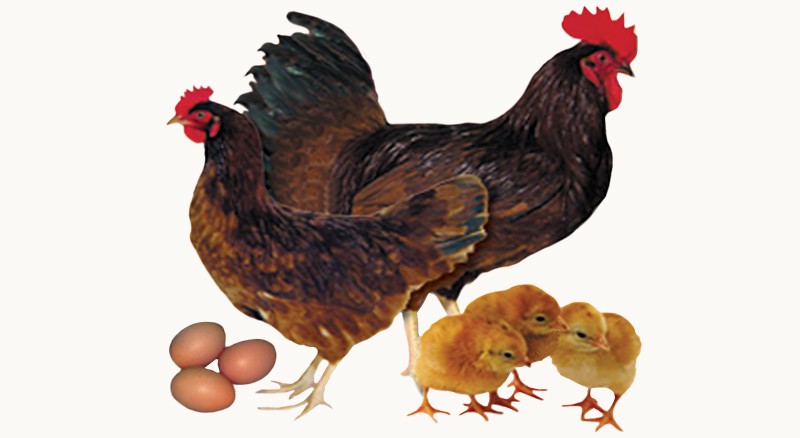
[Production Reds](https://www.tractorsupply.com/tsc/catalog/chickens?filter=1nw%7CProduction%20Red) are prized for their efficiency, boasting impressive egg production and a rapid maturity rate that allows them to start producing sooner than other [poultry breeds](https://www.tractorsupply.com/tsc/cms/life-out-here/the-coop/poultry-breeds). In a day-to-day yard setting, these chickens tend to stay active and curious, quickly adapting to a routine that balances time in the coop with ample foraging opportunities.
This chicken breed guide from Tractor Supply highlights the key characteristics of Production Reds, including their prolific egg-laying abilities, friendly disposition in mixed flocks and remarkable adaptability. Gain practical insights into successfully raising these chickens and making the most of your poultry supplies.
#### Quick Facts
- __Breed type:__ Dual-purpose (egg-forward)
- __Egg color:__ Brown
- __Pen or free-range:__ Both
- __Temperament:__ Docile, calm, friendly, curious
#### __Production Red Breed quick facts:__
- __Lifespan:__ 5-8 years
- __Weight:__ Females (hens): 5-7 lb.; Males (roosters): about 9 lb.
- __Appearance:__ Red/mahogany, single comb
- __Egg production:__ 280-300 eggs/year
- __Good for beginners:__ Yes
#### Key Takeaways
- These birds are considered a high-output laying breed, with many hens producing 280-300 eggs per year.
- Production Reds are commonly described as a cross rather than a standardized breed, with performance that can resemble a sex-link-style egg-layer.
- They tolerate confinement well and still show strong foraging interest.
- Broodiness is usually uncommon, which supports steadier laying and fewer extended pauses.
### __Where Production Reds Come From__
The Production Red is not a traditional heritage breed, but a purpose-bred hybrid. Developed in the mid-20th century, breeders selectively crossed [Rhode Island Red](https://www.tractorsupply.com/tsc/catalog/chickens?filter=1nw%7CRhode%20Island%20Red) and [New Hampshire Red](https://www.tractorsupply.com/tsc/catalog/chickens?filter=1nw%7CNew%20Hampshire%20Red) stock, with some lines also described as crossing Rhode Island Reds with Rhode Island Whites.
Production Reds were likely a product of the growing demand for high-production chickens. Therefore, the focus was less on maintaining a strict breed standard and more on producing hens that laid consistently, matured quickly and thrived in a variety of environments.
Today, this breed continues to be valued for exactly what it was designed to do: deliver steady production with strong survivability, making it a practical choice for egg-focused keepers.
### __Temperament and Group Dynamics__
Production Reds are often described as having an even-keeled temperament, making them well-suited for both backyard and commercial settings. They are calm, alert, generally easy to manage and usually tolerate human interaction well, especially when raised with regular handling.
Within a flock, these birds often land around the middle of the pecking order, meaning they are neither overly aggressive nor pushovers. This balance allows them to integrate smoothly with other calm or similarly sized birds, as long as correct introduction practices are followed.
Bred for efficiency, Production Reds are known to be active foragers and do well in free-range or spacious environments. They are social birds, which is why they prefer being part of a group. However, overcrowding can be stressful, so adequate space is recommended.
__Expert tip:__ Production Reds are in a red color family that can range from lighter red to deep mahogany. Within a mixed flock, [poultry ID bands](https://www.tractorsupply.com/tsc/catalog/poultry-id-bands) can help you quickly distinguish between different breeds in the yard.
### __Physical Size and Production Output__
Production Reds are categorized as a medium- to large-sized, dual-purpose breed. These chickens sport a solid, well-built frame without being overly bulky. Males (roosters) are heavier than hens, weighing about 9 lb., while their female counterparts (hens) weigh 5-7 lb. They feature single red combs, yellow legs and, while primarily red, may have some black tail feathers.
Egg production is where this breed truly shines. Hens can lay 280-300 large brown eggs per year, often beginning earlier than many traditional dual-purpose breeds, between 16-22 weeks of age. In addition to their large production numbers, these chickens are valued for their steady output, laying consistently through cooler months when other breeds tend to slow down.
While they are mostly valued for their egg production, Production Red chickens are still suitable for meat. Their harvest tends to be leaner and better suited for roasting or stewing rather than frying. When you do raise birds for the table, the right [processing equipment](https://www.tractorsupply.com/tsc/catalog/poultry-processing-equipment) can help achieve a cleaner, more organized finish.
__Expert tip:__ Because Production Reds are such efficient layers, they benefit from scheduled rest periods. This period, typically in the form of a seasonal molt, allows them to recover from the physical strain of laying, which can result in better egg quality, stronger shells and a longer, healthier, more productive life.
### __Health, Care and Living Space Priorities__
Production Reds are widely described as hardy and adaptable, a result of their selective breeding for performance across a wide range of conditions. Their resilience allows them to tolerate both heat and cold better than many lighter production breeds, making them a dependable choice in varied climates. Through routine care, including parasite prevention, clean living spaces and regular health checks, you can ensure your birds remain robust and productive.
#### Nutrition
To support their high egg production and overall health, proper nutrition is essential. Once mature, balanced [chicken feed](https://www.tractorsupply.com/tsc/catalog/poultry-feed) formulated for layers should form the foundation of their diet, providing the protein, vitamins and minerals necessary for strong egg production and overall vitality. Occasional [poultry treats](https://www.tractorsupply.com/tsc/catalog/poultry-treats), greens and chicken-safe kitchen scraps can provide enrichment and variety.
#### Layouts for Production Reds
Production Reds tolerate confinement well and still enjoy foraging, which gives them flexibility across home setups. When you plan [coops and pens](https://www.tractorsupply.com/tsc/catalog/coops-pens), aim for a layout that supports predictable movement and reduces crowding points, especially at doors and roost approach areas. Access and placement can shape flock pressure, especially in mixed groups, so anchor the layout around these points:
- [__Feeders and waterers__](https://www.tractorsupply.com/tsc/catalog/poultry-feeders-waterers) work best when they are spaced to prevent crowding and keep calmer birds from getting edged out.
- [__Nesting boxes__](https://www.tractorsupply.com/tsc/catalog/poultry-nesting-boxes) belong in a quieter zone of the coop to support a more comfortable laying flow for an egg-forward bird.
- [__Chicken wire and netting__](https://www.tractorsupply.com/tsc/catalog/chicken-wire-poultry-netting) help keep active birds where they belong when they start testing edges and height.
__Expert tip:__ Healthy, dry living conditions, combined with proper feed, will help prevent common health issues and keep your Production Reds thriving.
### __Shop Production Red Flock Basics at Tractor Supply__
Production Reds fit best when you lean into what they were bred to do: lay well, mature quickly and stay efficient over time. Structure daily routines to prioritize frequent nest use, reliable access to feed and water and an environment that accommodates the active nature of your birds. For [poultry supplies](https://www.tractorsupply.com/tsc/category/poultry) that support your Production Reds during Life Out Here, visit [your local Tractor Supply store](https://www.tractorsupply.com/tsc/store-locator) or browse our inventory using our website.
### __Frequently Asked Questions About the Production Red Breed__
__What is a Production Red chicken?__
A Production Red is a crossbreed developed for efficiency, most notably high egg output and possible meat production, rather than show standardization.
__Are Production Reds calm to handle?__
Hens are often docile, calm and friendly, while roosters can be more variable and a little more aggressive.
__Does this breed need special care?__
They typically do well with standard poultry management, provided they receive a balanced diet and have a comfortable living environment.
Get the top deals, latest trends and more
Sign up for emails from Tractor Supply today.
First Name*
First Name*
Last Name*
Last Name*
Email*
Email*
Sign Up
### Customer Support
- [Order Status](https://www.tractorsupply.com/tsc/orders?orderlookuppage)
- [Return Policy](https://www.tractorsupply.com/tsc/customer-solutions#ProductReturns)
- [Delivery Options](https://www.tractorsupply.com/tsc/customer-solutions#DeliveryOptions)
- [Tax Exemptions](https://www.tractorsupply.com/tsc/cms/policies-information/customer-solutions/tax-exemption)
- [Frequently Asked Questions](https://www.tractorsupply.com/tsc/customer-solutions#CustomerFAQ)
- [Contact Us](https://www.tractorsupply.com/tsc/customer-solutions#contact)
- [Recall Notices](https://www.tractorsupply.com/tsc/cms/policies-information/customer-solutions/recall-notices.html)
- Call:
(877) 718-6750
- [](https://www.tractorsupply.com)
Mon - Sat: 7am - 9pm CT
- [](https://www.tractorsupply.com)
Sun: 8am - 7pm CT
- [](https://www.tractorsupply.com)
Closed Christmas Day
### About Us
- [Who We Are](https://corporate.tractorsupply.com/company-overview/company-profile/default.aspx)
- [Investor Relations](https://ir.tractorsupply.com/CorporateProfile)
- [Stewardship](https://corporate.tractorsupply.com/stewardship/overview/default.aspx)
- [Community](https://ir.tractorsupply.com/Peer)
- [Military Support](https://www.tractorsupply.com/tsc/cms/military)
- [Product Catalog](https://www.tractorsupply.com/a/pt/index)
- [Tractor Supply Stores](https://www.tractorsupply.com/tsc/store-locator)
- [.Pharmacy Verified Website](https://tractorsupply.com/tsc/cms/accreditation)
### Work With Us
- [Careers](https://www.tractorsupply.careers/?utm_source=corpsite&utm_campaign=TSC_Shop&cm_sp=footer-_-tsc%20careers)
- [Sponsorship](https://www.tractorsupply.com/tsc/cms/policies-information/about-tsc/sponsorships)
- [Affiliate Program](https://www.tractorsupply.com/tsc/cms/policies-information/affiliate-program)
- [Potential Vendor Partners](https://www.tractorsupply.com/tsc/cms/policies-information/vendor-information/potential-vendor-partners)
- [Vendor Information](https://www.tractorsupply.com/tsc/cms/policies-information/vendor-information/vendor-center)
- [Tractor Supply Media Network](https://www.tractorsupplymedianetwork.com/)
### Neighbor's Club
- [About](https://www.tractorsupply.com/tsc/cms/neighbors-club)
- [Rewards](https://www.tractorsupply.com/AccountDashboardView?catalogId=10051&langId=&storeId=10151&topNav=nCOfferReward%3Fcm_sp%3Dfooter-_-navigation-_-Neighbors%20Club%20Member)
- [Hometown Heroes](https://www.tractorsupply.com/tsc/myaccount/herobenefits)
- [Frequently Asked Questions](https://www.tractorsupply.com/tsc/cms/neighbors-club-faq)
- [Terms & Conditions](https://www.tractorsupply.com/tsc/cms/neighbors-club-terms-and-conditions)
### Credit Center
- [TSC Credit Card](https://www.tractorsupply.com/tsc/cms/credit)
- [Klarna](https://www.tractorsupply.com/tsc/cms/klarna)
### Stay Connected
Connect & Share with the Tractor Supply Community.
- [](https://www.facebook.com/TractorSupplyCo?cm_sp=footer-_-social%20icons-_-facebook)
- [](https://www.pinterest.com/tractorsupplyco?cm_sp=footer-_-social%20icons-_-pinterest)
- [](https://instagram.com/tractorsupply?cm_sp=footer-_-social%20icons-_-instagram)
- [](https://www.youtube.com/user/TSCTractorSupply?cm_sp=footer-_-social%20icons-_-youtube)
- [](https://www.tiktok.com/@tractorsupply?cm_sp=footer-_-social%20icons-_-tiktok)
### Tractor Supply App
Shop on the go with the Tractor Supply App
[Learn More](https://www.tractorsupply.com/tsc/cms/app.html)
[](https://apps.apple.com/us/app/id1502197298)
[](https://play.google.com/store/apps/details?id=com.consumerapp_v1)
### Stay Connected
Connect & Share with the Tractor Supply Community.
- [](https://www.facebook.com/TractorSupplyCo?cm_sp=footer-_-social%20icons-_-facebook)
- [](https://www.pinterest.com/tractorsupplyco?cm_sp=footer-_-social%20icons-_-pinterest)
- [](https://instagram.com/tractorsupply?cm_sp=footer-_-social%20icons-_-instagram)
- [](https://www.youtube.com/user/TSCTractorSupply?cm_sp=footer-_-social%20icons-_-youtube)
- [](https://www.tiktok.com/@tractorsupply?cm_sp=footer-_-social%20icons-_-tiktok)
### Tractor Supply App
Shop on the go with the Tractor Supply App
[Learn More](https://www.tractorsupply.com/tsc/cms/app.html)
[](https://apps.apple.com/us/app/id1502197298)
[](https://play.google.com/store/apps/details?id=com.consumerapp_v1)
### Customer Support
- [Order Status](https://www.tractorsupply.com/tsc/orders?orderlookuppage)
- [Return Policy](https://www.tractorsupply.com/tsc/customer-solutions#ProductReturns)
- [Delivery Options](https://www.tractorsupply.com/tsc/customer-solutions#DeliveryOptions)
- [Tax Exemptions](https://www.tractorsupply.com/tsc/cms/policies-information/customer-solutions/tax-exemption)
- [Frequently Asked Questions](https://www.tractorsupply.com/tsc/customer-solutions#CustomerFAQ)
- [Contact Us](https://www.tractorsupply.com/tsc/customer-solutions#contact)
- [Recall Notices](https://www.tractorsupply.com/tsc/cms/policies-information/customer-solutions/recall-notices.html)
- [Call:](https://www.tractorsupply.com) [(877) 718-6750](tel:%28877%29%20718-6750)
- [](https://www.tractorsupply.com)
Mon - Sat: 7am - 9pm CT
- [](https://www.tractorsupply.com)
Sun: 8am - 7pm CT
- [](https://www.tractorsupply.com)
Closed Christmas Day
### About Us
- [Who We Are](https://corporate.tractorsupply.com/company-overview/company-profile/default.aspx)
- [Investor Relations](https://ir.tractorsupply.com/CorporateProfile)
- [Stewardship](https://corporate.tractorsupply.com/stewardship/overview/default.aspx)
- [Community](https://ir.tractorsupply.com/Peer)
- [Military Support](https://www.tractorsupply.com/tsc/cms/military)
- [Product Catalog](https://www.tractorsupply.com/a/pt/index)
- [Tractor Supply Stores](https://www.tractorsupply.com/tsc/store-locator)
- [.Pharmacy Verified Website](https://tractorsupply.com/tsc/cms/accreditation)
### Work With Us
- [Careers](https://www.tractorsupply.careers/?utm_source=corpsite&utm_campaign=TSC_Shop&cm_sp=footer-_-tsc%20careers)
- [Sponsorship](https://www.tractorsupply.com/tsc/cms/policies-information/about-tsc/sponsorships)
- [Affiliate Program](https://www.tractorsupply.com/tsc/cms/policies-information/affiliate-program)
- [Potential Vendor Partners](https://www.tractorsupply.com/tsc/cms/policies-information/vendor-information/potential-vendor-partners)
- [Vendor Information](https://www.tractorsupply.com/tsc/cms/policies-information/vendor-information/vendor-center)
- [Tractor Supply Media Network](https://www.tractorsupplymedianetwork.com/)
### Neighbor's Club
- [About](https://www.tractorsupply.com/tsc/cms/neighbors-club)
- [Rewards](https://www.tractorsupply.com/AccountDashboardView?catalogId=10051&langId=&storeId=10151&topNav=nCOfferReward%3Fcm_sp%3Dfooter-_-navigation-_-Neighbors%20Club%20Member)
- [Hometown Heroes](https://www.tractorsupply.com/tsc/myaccount/herobenefits)
- [Frequently Asked Questions](https://www.tractorsupply.com/tsc/cms/neighbors-club-faq)
- [Terms & Conditions](https://www.tractorsupply.com/tsc/cms/neighbors-club-terms-and-conditions)
### Credit Center
- [TSC Credit Card](https://www.tractorsupply.com/tsc/cms/credit)
- [Klarna](https://www.tractorsupply.com/tsc/cms/klarna)
### Stay Connected
Connect & Share with the Tractor Supply Community.
- [](https://www.facebook.com/TractorSupplyCo?cm_sp=footer-_-social%20icons-_-facebook)
- [](https://www.pinterest.com/tractorsupplyco?cm_sp=footer-_-social%20icons-_-pinterest)
- [](https://instagram.com/tractorsupply?cm_sp=footer-_-social%20icons-_-instagram)
- [](https://www.youtube.com/user/TSCTractorSupply?cm_sp=footer-_-social%20icons-_-youtube)
- [](https://www.tiktok.com/@tractorsupply?cm_sp=footer-_-social%20icons-_-tiktok)
### Tractor Supply App
Shop on the go with the Tractor Supply App
[Learn More](https://www.tractorsupply.com/tsc/cms/app.html)
- [](https://apps.apple.com/us/app/id1502197298)
- [](https://play.google.com/store/apps/details?id=com.consumerapp_v1)
- [Privacy policy](https://www.tractorsupply.com/tsc/cms/policies-information/customer-solutions/privacy-policy.html)
- [Your Privacy Choices](#)
- [Terms and Conditions](https://www.tractorsupply.com/tsc/cms/policies-information/customer-solutions/terms-and-conditions-of-use.html)
- [California Transparency Act](https://www.tractorsupply.com/tsc/cms/policies-information/about-tsc/california-transparency-act-of-2010.html)
- [Legal Notices](https://www.tractorsupply.com/tsc/cms/policies-information/customer-solutions/legal-notices.html)
- [Accessibility](https://www.tractorsupply.com/tsc/cms/accessibility.html)
- [Responsible Disclosure Statement](https://www.tractorsupply.com/tsc/cms/policies-information/customer-solutions/responsible-disclosure-statement.html)
- [Surprise (Balance) Medical Billing Disclosure](https://www.tractorsupply.com/tsc/cms/surprise-billing)
- [Transparency in Coverage](https://transparency-in-coverage.uhc.com/?cm_sp=footer-_-navigation-_-transparency%20coverage)
- [Human Rights Policy](https://www.tractorsupply.com/tsc/cms/human-rights-policy)
- [Vendor Code of Conduct](https://www.tractorsupply.com/tsc/cms/vendor-code-of-conduct)
- [California Notice of Collection](https://www.tractorsupply.com/tsc/cms/policies-information/customer-solutions/privacy-policy#_Toc189006423)
- [Privacy Requests](https://privacyportal.tractorsupply.com/)
© 2026, Tractor Supply Co. All Rights Reserved.