[Christmas](https://www.tractorsupply.com/tsc/catalog/christmas)[Halloween](https://www.tractorsupply.com/tsc/catalog/halloween)[Pet](https://www.tractorsupply.com/tsc/category/pet)[Lawn & Garden](https://www.tractorsupply.com/tsc/category/lawn-garden)[Truck & Automotive](https://www.tractorsupply.com/tsc/catalog/truck-automotive)[Sporting Goods](https://www.tractorsupply.com/tsc/category/sporting-goods)[Horse](https://www.tractorsupply.com/tsc/category/horse)[Farm & Ranch](https://www.tractorsupply.com/tsc/category/farm-ranch)[Clothing](https://www.tractorsupply.com/tsc/category/clothing)[Livestock](https://www.tractorsupply.com/tsc/catalog/livestock)[Pet & Animal Pharmacy](https://www.tractorsupply.com/tsc/category/pet-animal-pharmacy)[Tools](https://www.tractorsupply.com/tsc/category/tools)[Poultry](https://www.tractorsupply.com/tsc/category/poultry)[Fencing & Gates](https://www.tractorsupply.com/tsc/category/fencing-gates)[Home Improvement](https://www.tractorsupply.com/tsc/category/home-improvement)[Outdoor Living](https://www.tractorsupply.com/tsc/category/outdoor-living)[Heating & Cooling](https://www.tractorsupply.com/tsc/category/heating-cooling)[Home Decor & Furniture](https://www.tractorsupply.com/tsc/category/home-decor-furniture)[Outdoor Power Equipment](https://www.tractorsupply.com/tsc/category/outdoor-power-equipment)[Trailers & Towing](https://www.tractorsupply.com/tsc/category/trailers-towing)[Boots & Shoes](https://www.tractorsupply.com/tsc/category/boots-shoes)[Wild Birds & Wildlife](https://www.tractorsupply.com/tsc/category/wild-birds-wildlife)[Toys](https://www.tractorsupply.com/tsc/category/toys)[Gift Cards](https://www.tractorsupply.com/tsc/catalog/gift-cards-3074457345616710669-1)[Services](https://www.tractorsupply.com/tsc/services) [Propane Refill](https://www.tractorsupply.com/tsc/services/propane-refill-Franklin-TN-37069-2314)[Trailer Rental](https://www.tractorsupply.com/tsc/services/trailer-rental)[Garden Center](https://www.tractorsupply.com/tsc/services/garden-center-Franklin-TN-37069-2314)[Feed Center](https://www.tractorsupply.com/tsc/services/feed-center-Franklin-TN-37069-2314)[Same Day Delivery](https://www.tractorsupply.com/tsc/services/same-day-delivery)[PetVet Clinic](https://www.tractorsupply.com/tsc/services/petvet)[Pet Wash](https://www.tractorsupply.com/tsc/services/pet-wash)[Grooming at Petsense](https://www.tractorsupply.com/tsc/services/grooming-at-petsense)[Dog Training at Petsense](https://www.petsense.com/pages/training)[Tractor Supply Rx](https://www.tractorsupply.com/tsc/category/pet-animal-pharmacy)[Pet Insurance](https://quote.petted.com/quote/ref=tractor?cm_sp=Navi-_-Pet%20L1-_-Insurance)[Wag!](https://wagwalking.com/partners/tractor-supply?isIntSrch=written)
"Savings and Offers"
[Weekly Ad](https://www.tractorsupply.com/tsc/cms/digital-flyer)[Sale](https://www.tractorsupply.com/tsc/sale)[Clearance](https://www.tractorsupply.com/tsc/clearance)
"More Options"
[Weekly Ad](https://www.tractorsupply.com/tsc/cms/digital-flyer)[What's New](https://www.tractorsupply.com/tsc/whatsnew)[Tractor Supply App](https://www.tractorsupply.com/tsc/cms/app)[Earn Rewards with Neighbor's Club](https://www.tractorsupply.com/tsc/cms/neighbors-club)[Hometown Heroes](https://www.tractorsupply.com/tsc/myaccount/herobenefits)[Life Out Here Blog](https://www.tractorsupply.com/tsc/cms/life-out-here)[TSC Exclusive Brands](https://www.tractorsupply.com/tsc/cms/exclusive-brands)[Top Brands](https://www.tractorsupply.com/tsc/brands)[Clearance Items](https://www.tractorsupply.com/tsc/clearance)[Battery Finder](https://tractorsupply.interstatebatteries.com/?cm_sp=Header-_-Shop-_-Battery_Finder)[Outdoor Power Equipment Parts Finder](http://www.ordertree.com/tsc/?cm_sp=Header-_-Shop-_-Parts_Finder)[Hitch Finder](https://www.reesetowpower.com/tractor-supply/?cm_sp=Header-_-Shop-_-Hitch_Finder)
Spend $49.99 to unlock Free Delivery on most orders
|
[Learn More](https://www.tractorsupply.com)
[Order status](https://www.tractorsupply.com/tsc/orders?orderlookuppage)[TSC Credit Cards](https://www.tractorsupply.com/tsc/cms/credit)[What’s new](https://www.tractorsupply.com/tsc/whatsnew)[Petsense](https://www.petsense.com/)[Weekly Ad](https://www.tractorsupply.com/tsc/cms/digital-flyer)
[](https://www.tractorsupply.com)
[](https://www.tractorsupply.com/)
Grassland (Franklin) TN
GRASSLAND (FRANKLIN) TN #2314
[2176 Hillsboro RD STE 122
Franklin, TN 37069](https://www.google.com/maps/search/?api=1&query=Tractor%20Supply%20Co.%201650%20Denmark%20RD%2CUnion%2CMO%2063084)
Open at 8:00 am
615-595-5700
Store Hours:
[Details](https://www.tractorsupply.com/tsc/store_Franklin-TN-37069_2314)
Grassland (Franklin) TN
Open at 8 am
Deliver to
37027
Ask ScoutAI
Sign In / EnrollGet rewarded!
Sign In / EnrollGet rewarded!
[](https://www.tractorsupply.com/tsc/cart)
Ask ScoutAI
[Christmas](https://www.tractorsupply.com/tsc/catalog/christmas)
[Halloween](https://www.tractorsupply.com/tsc/catalog/halloween)
[Pet](https://www.tractorsupply.com/tsc/category/pet)
[Lawn & Garden](https://www.tractorsupply.com/tsc/category/lawn-garden)
[Truck & Automotive](https://www.tractorsupply.com/tsc/category/truck-automotive)
[Sporting Goods](https://www.tractorsupply.com/tsc/category/sporting-goods)
[Horse](https://www.tractorsupply.com/tsc/category/horse)
[Farm & Ranch](https://www.tractorsupply.com/tsc/category/farm-ranch)
[Clothing](https://www.tractorsupply.com/tsc/category/clothing)
[Livestock](https://www.tractorsupply.com/tsc/category/livestock)
[Pet & Animal Pharmacy](https://www.tractorsupply.com/tsc/category/pet-animal-pharmacy)
[Tools](https://www.tractorsupply.com/tsc/category/tools)
[Poultry](https://www.tractorsupply.com/tsc/category/poultry)
[Fencing & Gates](https://www.tractorsupply.com/tsc/category/fencing-gates)
[Home Improvement](https://www.tractorsupply.com/tsc/category/home-improvement)
[Outdoor Living](https://www.tractorsupply.com/tsc/category/outdoor-living)
[Heating & Cooling](https://www.tractorsupply.com/tsc/category/heating-cooling)
* * *
[Menu](https://www.tractorsupply.com)
Search
[Home](https://www.tractorsupply.com/)
Sign In
[Cart](https://www.tractorsupply.com/tsc/cart)
[__Deals to start the season off right -__ Shop now>](https://www.tractorsupply.com/tsc/cms/digital-flyer)
* * *
CATEGORIES
Pets
- [Dogs](https://www.tractorsupply.com/tsc/cms/life-out-here/pet/dogs)
- [Cats](https://www.tractorsupply.com/tsc/cms/life-out-here/pet/cats)
- [All](https://www.tractorsupply.com/tsc/cms/life-out-here/pet)
The Barn
- [Horse](https://www.tractorsupply.com/tsc/cms/life-out-here/the-barn/horse)
- [Livestock](https://www.tractorsupply.com/tsc/cms/life-out-here/the-barn/livestock)
- [Goats & Sheep](https://www.tractorsupply.com/tsc/cms/life-out-here/the-barn/goats-and-sheep)
- [Pigs](https://www.tractorsupply.com/tsc/cms/life-out-here/the-barn/pigs)
- [All](https://www.tractorsupply.com/tsc/cms/life-out-here/the-barn)
The Coop
- [Start Your Flock](https://www.tractorsupply.com/tsc/cms/life-out-here/the-coop/start-your-flock)
- [Poultry Breeds](https://www.tractorsupply.com/tsc/cms/life-out-here/the-coop/poultry-breeds)
- [Coop Tips](https://www.tractorsupply.com/tsc/cms/life-out-here/the-coop/coop-tips)
- [Chick Care](https://www.tractorsupply.com/tsc/cms/life-out-here/the-coop/chick-care)
- [All](https://www.tractorsupply.com/tsc/cms/life-out-here/the-coop)
Garden
- [Gardening Tips](https://www.tractorsupply.com/tsc/cms/life-out-here/garden/gardening-tips)
- [Growing Guides](https://www.tractorsupply.com/tsc/cms/life-out-here/garden/growing-guides)
Home & Land
- [Fresh Recipes](https://www.tractorsupply.com/tsc/cms/life-out-here/garden-home-land/fresh-recipes)
- [Heating & Cooling](https://www.tractorsupply.com/tsc/cms/life-out-here/garden-home-land/heating-and-cooling)
- [Bees](https://www.tractorsupply.com/tsc/cms/life-out-here/garden-home-land/bees)
- [Lawn](https://www.tractorsupply.com/tsc/cms/life-out-here/garden-home-land/lawn)
- [Fencing](https://www.tractorsupply.com/tsc/cms/life-out-here/garden-home-land/fencing)
- [All](https://www.tractorsupply.com/tsc/cms/life-out-here/garden-home-land)
Tool Shop
- [The Garage](https://www.tractorsupply.com/tsc/cms/life-out-here/tool-shop/the-garage)
- [Tool Tips](https://www.tractorsupply.com/tsc/cms/life-out-here/tool-shop/tool-tips)
- [Stock Your Shop](https://www.tractorsupply.com/tsc/cms/life-out-here/tool-shop/stock-your-shop)
- [All](https://www.tractorsupply.com/tsc/cms/life-out-here/tool-shop)
Outdoor Life
- [Birding](https://www.tractorsupply.com/tsc/cms/life-out-here/outdoor-life/birding)
- [Recreation](https://www.tractorsupply.com/tsc/cms/life-out-here/outdoor-life/recreation)
- [Hunting](https://www.tractorsupply.com/tsc/cms/life-out-here/outdoor-life/hunting)
- [All](https://www.tractorsupply.com/tsc/cms/life-out-here/outdoor-life)
1. [Home](https://www.tractorsupply.com/tsc/cms/life-out-here)
2. [Outdoor Life](https://www.tractorsupply.com/tsc/cms/life-out-here/outdoor-life)
3. [Hunting](https://www.tractorsupply.com/tsc/cms/life-out-here/outdoor-life/hunting)
4. 25 Deer Hunting Scent Control Techniques
# 25 Deer Hunting Scent Control Techniques
Nov 14, 2025
[Josh Honeycutt with Field & Stream](https://www.tractorsupply.com)
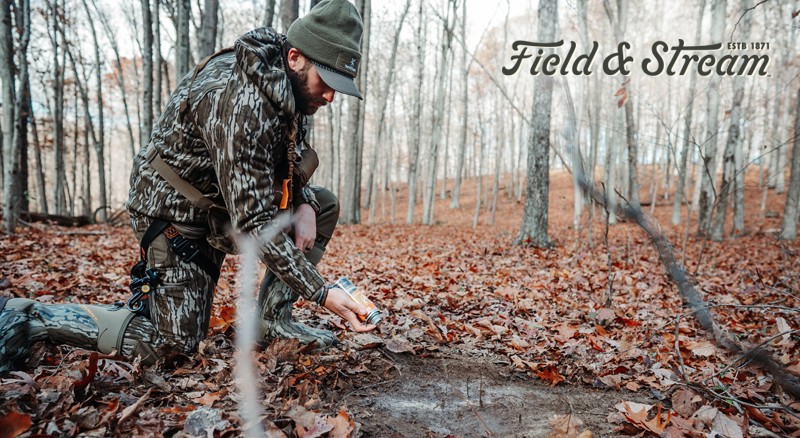
A 12-point buck with double drop-tines stands at high alert. Eyes dart around. Ears spin like radars on swivels. The slight swirl of wind carries just a stray whiff of your stink straight up its nostril, and that sends its straight into fight-or-flight mode. Within seconds, it snorts and bounds away into cover. Your dream buck was so close, but is now so far away.
If you’d have implemented sound deer hunting scent control techniques, the outcome would have been significantly different. Perhaps it would have been a record-class whitetail with your name on it. Maybe just a personal best. Regardless, you would’ve shot that deer if not for the aroma-based blunders.
So, learn how to fool a whitetail’s best defense — its nose. Here are tips to help with scent elimination when hunting deer and other big game.
## Recommended Products
01. [
\
3.3 out of 5 stars with 18 reviews
\
__3.3__ (18)
\
____Field & Stream__ 48 MP Trail Cameras, 2 pk.__
\
__$99.99__
\
__Was $109.99Save $10.00__](https://www.tractorsupply.com/tsc/product/field-stream-48-mp-trail-cameras-2-pack "Field & Stream 48 MP Trail Cameras, 2 pk.")
Add to Cart
02. [
\
4.2 out of 5 stars with 42 reviews
\
__4.2__ (42)
\
____Field & Stream__ 1-Person Habitat 4 Hunting Blind, 48 x 48 x 78in.__
\
__$549.99__](https://www.tractorsupply.com/tsc/product/field-stream-1-person-habitat-4-hunting-blind "Field & Stream 1-Person Habitat 4 Hunting Blind, 48 x 48 x 78in.")
Add to Cart
03. [
\
4.4 out of 5 stars with 17 reviews
\
__4.4__ (17)
\
____Tink's__ 1 oz. Scent Bombs Scent Dispersal, 3-Pack__
\
__$7.99__](https://www.tractorsupply.com/tsc/product/tinks-scent-bombs-value-pack "Tink's 1 oz. Scent Bombs Scent Dispersal, 3-Pack")
Add to Cart
04. [
\
4.7 out of 5 stars with 15 reviews
\
__4.7__ (15)
\
____Wildlife Research Center__ 24 oz. Scent Killer Gold Spray__
\
__$14.99__](https://www.tractorsupply.com/tsc/product/wildlife-research-scent-killer-gold-spray-24-fl-oz "Wildlife Research Center 24 oz. Scent Killer Gold Spray")
Add to Cart
05. Top Rated
[
\
4.9 out of 5 stars with 14 reviews
\
__4.9__ (14)
\
____Wildlife Research Center__ 24 oz. Scent Killer Super Charged Spray__
\
__$9.99__](https://www.tractorsupply.com/tsc/product/wildlife-research-scent-killer-super-charged-spray-24-fl-oz "Wildlife Research Center 24 oz. Scent Killer Super Charged Spray")
Add to Cart
06. [
\
4.6 out of 5 stars with 5 reviews
\
__4.6__ (5)
\
____Muddy__ Men's Nucleus Heated Bottom Hunting Base Layer Pants__](https://www.tractorsupply.com/tsc/product/muddy-nucleus-heated-bottom "Muddy Men's Nucleus Heated Bottom Hunting Base Layer Pants")
[Choose Options](https://www.tractorsupply.com/tsc/product/muddy-nucleus-heated-bottom "Muddy Men's Nucleus Heated Bottom Hunting Base Layer Pants")
07. [
\
3.3 out of 5 stars with 15 reviews
\
__3.3__ (15)
\
____Field & Stream__ 3-Person Wide Bottom See-Through Mesh Ground Blind, 72 in. x 72 in. x 68 in.__
\
__$159.99__](https://www.tractorsupply.com/tsc/product/field-stream-3-person-wide-bottom-see-thru-mesh-blind "Field & Stream 3-Person Wide Bottom See-Through Mesh Ground Blind, 72 in. x 72 in. x 68 in.")
Add to Cart
08. [
\
3.9 out of 5 stars with 14 reviews
\
__3.9__ (14)
\
____Field & Stream__ 3-Person Heater House Ground Blind, 66 in. x 66 in. x 72 in.__
\
__$199.99__](https://www.tractorsupply.com/tsc/product/field-stream-3-person-heater-house-ground-blind-66-in-x-66-in-x-72-in "Field & Stream 3-Person Heater House Ground Blind, 66 in. x 66 in. x 72 in.")
Add to Cart
09. [
\
4.0 out of 5 stars with 3 reviews
\
__4.0__ (3)
\
____Field & Stream__ 32 MP ZD Trail Cam Combo__
\
__$79.99__](https://www.tractorsupply.com/tsc/product/field-stream-32-mp-zd-trail-cam-combo "Field & Stream 32 MP ZD Trail Cam Combo")
Add to Cart
10. [
\
4.2 out of 5 stars with 228 reviews
\
__4.2__ (228)
\
____Field & Stream__ 3-Person Habitat 5 Hunting Blind, 75 x 72 x 85in.__
\
__$649.99__](https://www.tractorsupply.com/tsc/product/field-stream-3-person-habitat-5-hunting-blind "Field & Stream 3-Person Habitat 5 Hunting Blind, 75 x 72 x 85in.")
Add to Cart
#### Wear Scent-Free Clothing & Gear
#### __1. Wash Hunting Clothing After Each Hunt__
It’s crucial to maintain your [hunting clothing](https://www.tractorsupply.com/tsc/catalog/hunting-clothing "hunting clothing"). This includes washing your camouflage after each hunt. Use a scent-reduction detergent to complete this process.
#### __2. Utilize Ozone- or Ozone-Esque Technologies with Clothing__
For about a decade, hunters have been using ozone technologies. Others use similar tech that accomplishes comparable results. One application, regardless of the route taken, is treating hunting clothing to remove unwanted sent.
#### __3. Store Hunting Clothing in a Dedicated Container__
Store hunting clothing in dedicated containers. This keeps them contained and away from aromas that might be floating around nearby. This also allows you to place a cover scent, such as cedar, inside of that container. Oftentimes, these containers are paired with ozone machines.
#### __4. Implement a Clothing Scent Management Regimen__
No matter what your process, be sure to implement a clothing scent control regimen. Doing so will decrease the amount of scent in your clothing and minimize how much is emitted in the field.
#### __5. Wear Scent-Free Boots__
Your feet leave behind a significant amount of scent. To reduce this, wear scent-free [boots](https://www.tractorsupply.com/tsc/catalog/hunting-boots?isIntSrch=written&srch=Hunting%20Boots&filter=1wj%7COdor%20Resistant "boots"). At least, wear boots that aren’t as likely to deposit unwanted scent. Generally, this requires wearing rubber boots, or better yet, hip boots or waders.
#### __6. Put on Hunting Clothes at the Hunting Property__
Another tip is not putting on your hunting clothes until you reach the property you’re actually hunting.

Waiting to put on hunting clothes until you arrive and park reduces the chances of scent contamination between home and the farm.
__Eliminate Everyday Odors Before Hunting__
__7. Minimize Foreign, Especially Pungent, Scents__
Do everything possible to minimize foreign scents. Be especially mindful and restrictive of highly pungent aromas. Examples include gasoline, scented deodorants, cologne, air fresheners, and more. These are foreign smells to the deer woods that whitetails will not tolerate.
#### __8. Avoid Smelly Habits__
Likewise, avoid smelly habits. Examples include getting gas in your camo, eating in your hunting clothing, smoking tobacco products, etc. These odor-causing habits that can prove just enough to botch a hunt.
#### __9. Swear Off Smelly Foods__
Continuing with the theme, swear off smelly foods. You are what you eat. Therefore, you will smell differently according to what you consume. Don’t eat foods that cause indigestion or gas. Refrain from things that produce bad breath or increased smell when sweating.

#### __Use Scent Reduction Products__
#### __10. Deploy Scent-Reduction Products__
There is no way to completely remove human scent and other odors. However, you can use different [scent-reduction products](https://www.tractorsupply.com/tsc/search/scent%20covers%20?isIntSrch=written "scent-reduction products") to minimize these as much as possible. Therefore, deploy available products that you have access to, and which are within your budget.
#### __11. Benefit From Cedar Branch Scent Cover__
There are numerous things that work well for cover. One example is cedar. Benefit from cedar scent cover in your hunting clothing container, as well as in the field while hunting. You might even hunt in a cedar tree which in itself can be a scent management tactic.
#### __12. Use Other Cover Scents__
Don’t like cedar? Use other cover scents instead. Earth scent is a popular choice. Apple, deer scents (but not deer urines), etc. are also options. While these won’t completely mask scent, these can assist with treating clothing, packs, and other gear.
#### __13. Set Up a Scent Stopper__
Another good application for scents is setting up a scent stopper. Hang or spray a scent on each side of your downwind scent cone. This can stop deer and give you a shot opportunity before they smell you.
#### __14. Don’t Sweat At All__
Sweating is the worst thing you can do to minimize scent. Move slowly, don’t get hot, and leave off warm layers until you reach your hunting spot. Whatever you do, just don’t sweat (literally).
#### __15. Implement Ozone- or Ozone-Esque Technologies in the Field__
Ozone machines and similar technologies are good for treating clothing. Some can also be used in the field. Positioning these on the downwind side of your position can help neutralize some of your scent.
__Manage Hunting Conditions for Scent Control__
#### __16. Maintain Constant Wind Direction Awareness__
Always be aware of the current wind direction. Maintaining constant observation is needed for ensuring you continue to have an acceptable wind direction and speed.
#### __17. Use Thermals to Your Advantage__
[Thermals](https://www.tractorsupply.com/tsc/catalog/hunting-base-layers?isIntSrch=written&srch=Hunting%20Clothing "Thermals") are independent of the prevailing wind direction. These are best defined as the rising and falling of wind columns that are influenced by the heating and cooling of the landscape. These are also impacted by topography, and even bodies of water. You can use these to your advantage. In the morning, the rising sun heats up an area, and thermals rise.

So, hunters should benefit by hunting above expected deer activity. In the afternoon, the setting of the sun cools the area, and thermals fall. So, Hunters should set up below expected deer movement. Interestingly, in the late afternoon, when there’s minimal wind, water sources can pull scent down toward and along the surface.
#### __18. Hunt a Just-Off Wind Direction__
Some mature deer are more likely to move in certain areas when the wind is somewhat in their favor. Therefore, hunt a just-off wind direction to give them the confidence to move, even though it’s just good enough to keep them from smelling you.
__Optimize Your Hunting Location & Setup__
#### __19. Use Good Scent Blockers__
I’m not talking about product-based scent blockers. These are large physical objects in the field that keep deer from getting downwind of your position. Maybe that’s a steep bluff, steep riverbank, big brush pile, downed tree, etc. Use these and more to your advantage.
#### __20. Choose the Right Stand Locations__
Select the right treestand location and you won’t have a need for extensive scent management. The stand location and wind direction will handle everything.
#### __21. Hunt From Scent-Proof Blinds__
Some hunting blinds don’t retain scent. Others do, though. Hunting from these enclosed blinds, and keeping doors and windows sealed, can retain much of the scent within your blind. This can effectively keep deer from smelling you.
#### __22. Chart Effective Entry Routes__
Taking the wrong entry route into a hunting property can cause deer to smell you before the hunting begins. They might catch your wind scent along the walk, or ground scent after the fact, but either scenario can ruin the hunt. Thus, follow entry routes that don’t alert deer.
#### __23. Follow the Right Exit Paths__
Choosing the wrong exit route out of a hunting area can also alert deer to your presence. This can ruin future hunts and slowly erode the quality of your hunting spots. So, choose exit paths that don’t spook deer.
#### __24. Rotate Stand Location Selections__
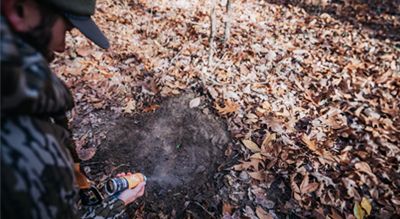
In most situations, hunting the same treestand location repeatedly isn’t good. That can lead to burnout, especially if deer continuously catch your scent (directly or on the ground). To avoid this, rotate stand locations to keep deer guessing.
#### __25. Manage Pressure and Overhunting__
There’s a delicate balance between managing pressure and overhunting a spot. Walk that line between hunting just enough to get your shot, and not so much that you pressure deer. That requires choosing your days wisely and hunting when conditions are best.
__Don’t Stink Up Your Deer Hunt__
There are many deer hunting scent control techniques available to deer hunters. Use the above tips to reduce scent when hunting. Don’t stink up your deer hunt, and you’ll experience better results and fill more tags.
Get the top deals, latest trends and more
Sign up for emails from Tractor Supply today.
First Name*
First Name*
Last Name*
Last Name*
Email*
Email*
Sign Up
### Customer Support
- [Order Status](https://www.tractorsupply.com/tsc/orders?orderlookuppage)
- [Return Policy](https://www.tractorsupply.com/tsc/customer-solutions#ProductReturns)
- [Delivery Options](https://www.tractorsupply.com/tsc/customer-solutions#DeliveryOptions)
- [Tax Exemptions](https://www.tractorsupply.com/tsc/cms/policies-information/customer-solutions/tax-exemption)
- [Frequently Asked Questions](https://www.tractorsupply.com/tsc/customer-solutions#CustomerFAQ)
- [Contact Us](https://www.tractorsupply.com/tsc/customer-solutions#contact)
- [Recall Notices](https://www.tractorsupply.com/tsc/cms/policies-information/customer-solutions/recall-notices.html)
- Call:
(877) 718-6750
- [](https://www.tractorsupply.com)
Mon - Sat: 7am - 9pm CT
- [](https://www.tractorsupply.com)
Sun: 8am - 7pm CT
- [](https://www.tractorsupply.com)
Closed Christmas Day
### About Us
- [Who We Are](https://corporate.tractorsupply.com/company-overview/company-profile/default.aspx)
- [Investor Relations](https://ir.tractorsupply.com/CorporateProfile)
- [Stewardship](https://corporate.tractorsupply.com/stewardship/overview/default.aspx)
- [Community](https://ir.tractorsupply.com/Peer)
- [Military Support](https://www.tractorsupply.com/tsc/cms/military)
- [Product Catalog](https://www.tractorsupply.com/a/pt/index)
- [Tractor Supply Stores](https://www.tractorsupply.com/tsc/store-locator)
- [.Pharmacy Verified Website](https://tractorsupply.com/tsc/cms/accreditation)
### Work With Us
- [Careers](https://www.tractorsupply.careers/?utm_source=corpsite&utm_campaign=TSC_Shop&cm_sp=footer-_-tsc%20careers)
- [Sponsorship](https://www.tractorsupply.com/tsc/cms/policies-information/about-tsc/sponsorships)
- [Affiliate Program](https://www.tractorsupply.com/tsc/cms/policies-information/affiliate-program)
- [Potential Vendor Partners](https://www.tractorsupply.com/tsc/cms/policies-information/vendor-information/potential-vendor-partners)
- [Vendor Information](https://www.tractorsupply.com/tsc/cms/policies-information/vendor-information/vendor-center)
- [Tractor Supply Media Network](https://www.tractorsupplymedianetwork.com/)
### Neighbor's Club
- [About](https://www.tractorsupply.com/tsc/cms/neighbors-club)
- [Rewards](https://www.tractorsupply.com/AccountDashboardView?catalogId=10051&langId=&storeId=10151&topNav=nCOfferReward%3Fcm_sp%3Dfooter-_-navigation-_-Neighbors%20Club%20Member)
- [Hometown Heroes](https://www.tractorsupply.com/tsc/myaccount/herobenefits)
- [Frequently Asked Questions](https://www.tractorsupply.com/tsc/cms/neighbors-club-faq)
- [Terms & Conditions](https://www.tractorsupply.com/tsc/cms/neighbors-club-terms-and-conditions)
### Credit Center
- [TSC Credit Card](https://www.tractorsupply.com/tsc/cms/credit)
- [Klarna](https://www.tractorsupply.com/tsc/cms/klarna)
### Stay Connected
Connect & Share with the Tractor Supply Community.
- [](https://www.facebook.com/TractorSupplyCo?cm_sp=footer-_-social%20icons-_-facebook)
- [](https://www.pinterest.com/tractorsupplyco?cm_sp=footer-_-social%20icons-_-pinterest)
- [](https://instagram.com/tractorsupply?cm_sp=footer-_-social%20icons-_-instagram)
- [](https://www.youtube.com/user/TSCTractorSupply?cm_sp=footer-_-social%20icons-_-youtube)
- [](https://www.tiktok.com/@tractorsupply?cm_sp=footer-_-social%20icons-_-tiktok)
### Tractor Supply App
Shop on the go with the Tractor Supply App
[Learn More](https://www.tractorsupply.com/tsc/cms/app.html)
[](https://apps.apple.com/us/app/id1502197298)
[](https://play.google.com/store/apps/details?id=com.consumerapp_v1)
### Stay Connected
Connect & Share with the Tractor Supply Community.
- [](https://www.facebook.com/TractorSupplyCo?cm_sp=footer-_-social%20icons-_-facebook)
- [](https://www.pinterest.com/tractorsupplyco?cm_sp=footer-_-social%20icons-_-pinterest)
- [](https://instagram.com/tractorsupply?cm_sp=footer-_-social%20icons-_-instagram)
- [](https://www.youtube.com/user/TSCTractorSupply?cm_sp=footer-_-social%20icons-_-youtube)
- [](https://www.tiktok.com/@tractorsupply?cm_sp=footer-_-social%20icons-_-tiktok)
### Tractor Supply App
Shop on the go with the Tractor Supply App
[Learn More](https://www.tractorsupply.com/tsc/cms/app.html)
[](https://apps.apple.com/us/app/id1502197298)
[](https://play.google.com/store/apps/details?id=com.consumerapp_v1)
### Customer Support
- [Order Status](https://www.tractorsupply.com/tsc/orders?orderlookuppage)
- [Return Policy](https://www.tractorsupply.com/tsc/customer-solutions#ProductReturns)
- [Delivery Options](https://www.tractorsupply.com/tsc/customer-solutions#DeliveryOptions)
- [Tax Exemptions](https://www.tractorsupply.com/tsc/cms/policies-information/customer-solutions/tax-exemption)
- [Frequently Asked Questions](https://www.tractorsupply.com/tsc/customer-solutions#CustomerFAQ)
- [Contact Us](https://www.tractorsupply.com/tsc/customer-solutions#contact)
- [Recall Notices](https://www.tractorsupply.com/tsc/cms/policies-information/customer-solutions/recall-notices.html)
- [Call:](https://www.tractorsupply.com) [(877) 718-6750](tel:%28877%29%20718-6750)
- [](https://www.tractorsupply.com)
Mon - Sat: 7am - 9pm CT
- [](https://www.tractorsupply.com)
Sun: 8am - 7pm CT
- [](https://www.tractorsupply.com)
Closed Christmas Day
### About Us
- [Who We Are](https://corporate.tractorsupply.com/company-overview/company-profile/default.aspx)
- [Investor Relations](https://ir.tractorsupply.com/CorporateProfile)
- [Stewardship](https://corporate.tractorsupply.com/stewardship/overview/default.aspx)
- [Community](https://ir.tractorsupply.com/Peer)
- [Military Support](https://www.tractorsupply.com/tsc/cms/military)
- [Product Catalog](https://www.tractorsupply.com/a/pt/index)
- [Tractor Supply Stores](https://www.tractorsupply.com/tsc/store-locator)
- [.Pharmacy Verified Website](https://tractorsupply.com/tsc/cms/accreditation)
### Work With Us
- [Careers](https://www.tractorsupply.careers/?utm_source=corpsite&utm_campaign=TSC_Shop&cm_sp=footer-_-tsc%20careers)
- [Sponsorship](https://www.tractorsupply.com/tsc/cms/policies-information/about-tsc/sponsorships)
- [Affiliate Program](https://www.tractorsupply.com/tsc/cms/policies-information/affiliate-program)
- [Potential Vendor Partners](https://www.tractorsupply.com/tsc/cms/policies-information/vendor-information/potential-vendor-partners)
- [Vendor Information](https://www.tractorsupply.com/tsc/cms/policies-information/vendor-information/vendor-center)
- [Tractor Supply Media Network](https://www.tractorsupplymedianetwork.com/)
### Neighbor's Club
- [About](https://www.tractorsupply.com/tsc/cms/neighbors-club)
- [Rewards](https://www.tractorsupply.com/AccountDashboardView?catalogId=10051&langId=&storeId=10151&topNav=nCOfferReward%3Fcm_sp%3Dfooter-_-navigation-_-Neighbors%20Club%20Member)
- [Hometown Heroes](https://www.tractorsupply.com/tsc/myaccount/herobenefits)
- [Frequently Asked Questions](https://www.tractorsupply.com/tsc/cms/neighbors-club-faq)
- [Terms & Conditions](https://www.tractorsupply.com/tsc/cms/neighbors-club-terms-and-conditions)
### Credit Center
- [TSC Credit Card](https://www.tractorsupply.com/tsc/cms/credit)
- [Klarna](https://www.tractorsupply.com/tsc/cms/klarna)
### Stay Connected
Connect & Share with the Tractor Supply Community.
- [](https://www.facebook.com/TractorSupplyCo?cm_sp=footer-_-social%20icons-_-facebook)
- [](https://www.pinterest.com/tractorsupplyco?cm_sp=footer-_-social%20icons-_-pinterest)
- [](https://instagram.com/tractorsupply?cm_sp=footer-_-social%20icons-_-instagram)
- [](https://www.youtube.com/user/TSCTractorSupply?cm_sp=footer-_-social%20icons-_-youtube)
- [](https://www.tiktok.com/@tractorsupply?cm_sp=footer-_-social%20icons-_-tiktok)
### Tractor Supply App
Shop on the go with the Tractor Supply App
[Learn More](https://www.tractorsupply.com/tsc/cms/app.html)
- [](https://apps.apple.com/us/app/id1502197298)
- [](https://play.google.com/store/apps/details?id=com.consumerapp_v1)
- [Privacy policy](https://www.tractorsupply.com/tsc/cms/policies-information/customer-solutions/privacy-policy.html)
- [Your Privacy Choices](#)
- [Terms and Conditions](https://www.tractorsupply.com/tsc/cms/policies-information/customer-solutions/terms-and-conditions-of-use.html)
- [California Transparency Act](https://www.tractorsupply.com/tsc/cms/policies-information/about-tsc/california-transparency-act-of-2010.html)
- [Legal Notices](https://www.tractorsupply.com/tsc/cms/policies-information/customer-solutions/legal-notices.html)
- [Accessibility](https://www.tractorsupply.com/tsc/cms/accessibility.html)
- [Responsible Disclosure Statement](https://www.tractorsupply.com/tsc/cms/policies-information/customer-solutions/responsible-disclosure-statement.html)
- [Surprise (Balance) Medical Billing Disclosure](https://www.tractorsupply.com/tsc/cms/surprise-billing)
- [Transparency in Coverage](https://transparency-in-coverage.uhc.com/?cm_sp=footer-_-navigation-_-transparency%20coverage)
- [Human Rights Policy](https://www.tractorsupply.com/tsc/cms/human-rights-policy)
- [Vendor Code of Conduct](https://www.tractorsupply.com/tsc/cms/vendor-code-of-conduct)
- [California Notice of Collection](https://www.tractorsupply.com/tsc/cms/policies-information/customer-solutions/privacy-policy#_Toc189006423)
- [Privacy Requests](https://privacyportal.tractorsupply.com/)
© 2026, Tractor Supply Co. All Rights Reserved.
ScoutAI
BETA
* * *
Hi there, I’m your AI assistant—here to guide you through our products and answer any questions along the way. How can I help you?
Can you suggest some good lawn mowers ?
What’s the best safe for keeping my firearms secure at home?
What can i feed my puppy ?
* * *
TSC AI is for informational use only. Don’t share sensitive info like SSN or payment details.